
Insights Hub
Canadian payroll, tax, and take-home pay guides & news.
Practical articles for comparing job offers, provinces, deductions, and salary decisions in Canada — plus what changes to tax and benefit rules mean for your paycheque, twice a week.
Compare provinces
See take-home pay differences before moving or accepting an offer.
Open tool →Latest guides
51 articles available
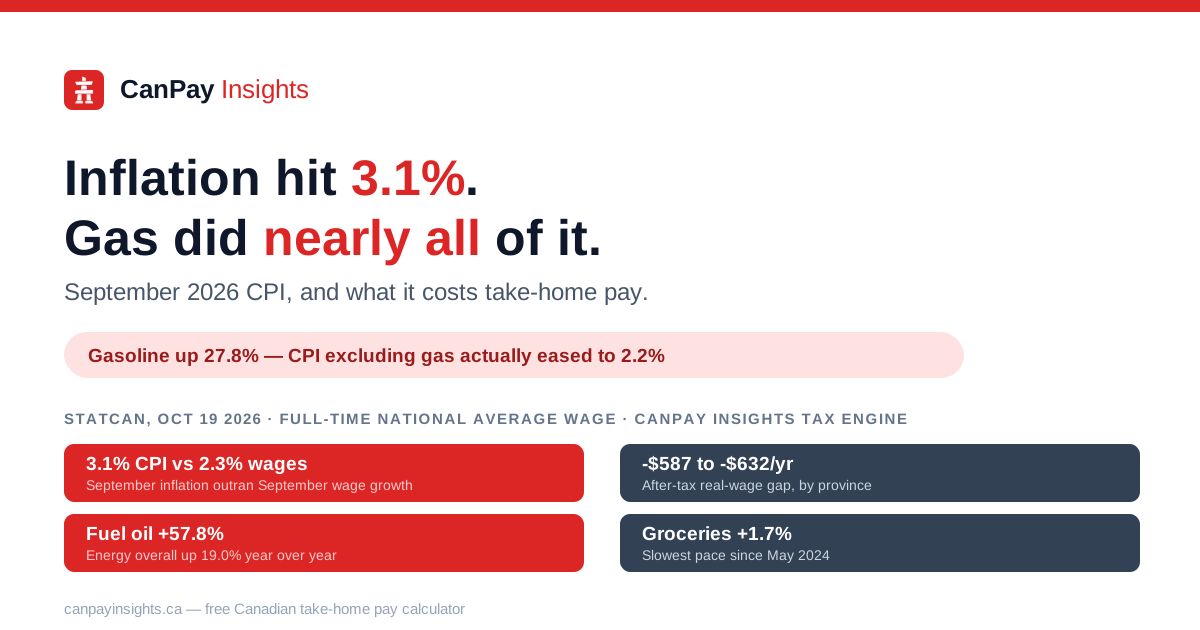
Canada's Inflation Jumped to 3.1% in September — Gas Prices Did Nearly All of the Damage
Canada's inflation rate climbed to 3.1% in September 2026, up from 3.0% in August, as gasoline prices surged 27.8% year over year. With wages up only 2.3% the same month, a full-time worker on the national average wage is now about $587 to $632 behind inflation after tax, depending on province.
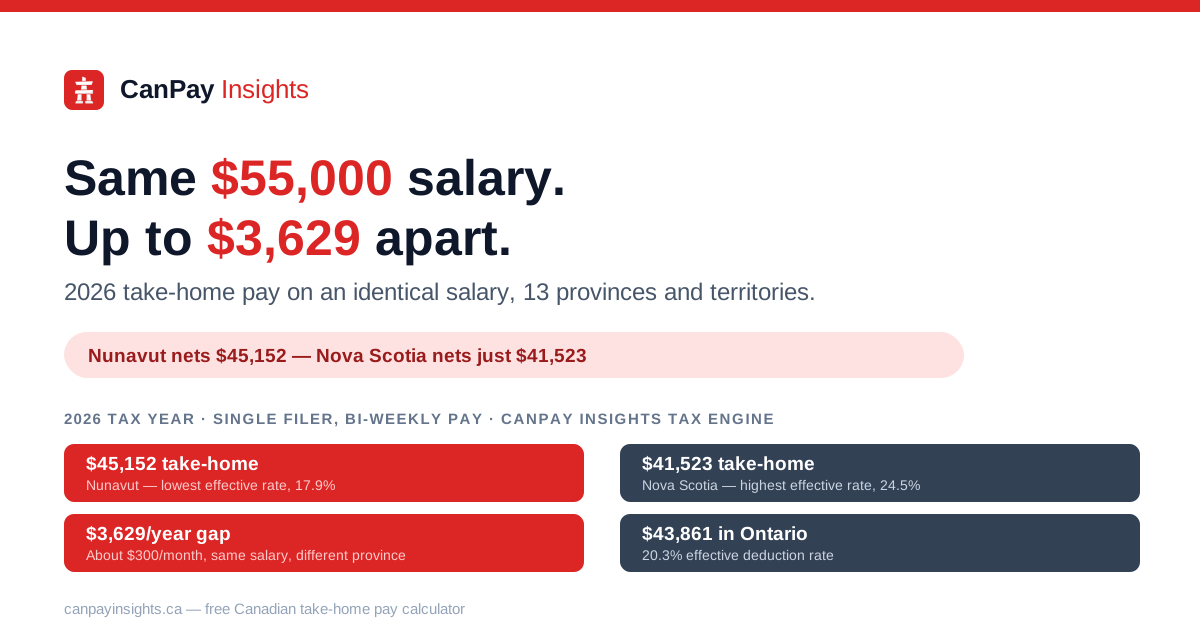
$55,000 Salary: What You Actually Take Home, Province by Province (2026)
A $55,000 salary nets $45,152 a year in Nunavut but only $41,523 in Nova Scotia — a $3,629 gap, almost all of it provincial tax. Exact 2026 take-home pay, tax, and deductions for all 13 provinces and territories.
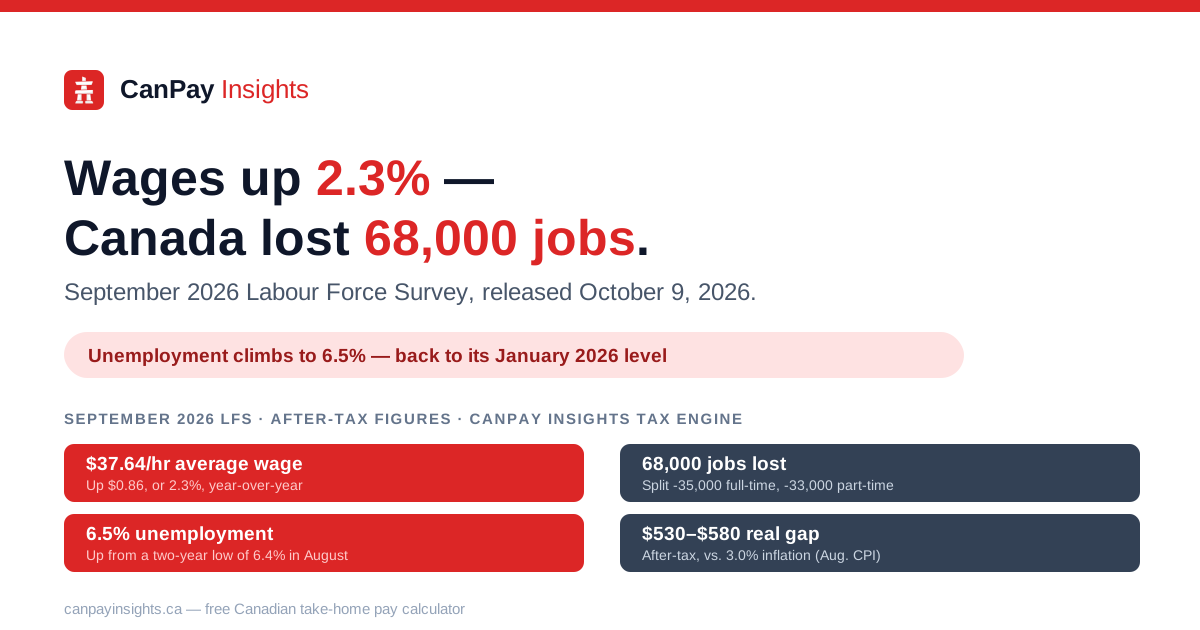
Wages Grew 2.3% in September 2026 — But Canada Lost 68,000 Jobs and Unemployment Hit 6.5%
Average hourly wages rose 2.3% year-over-year in September 2026, up from 2.0% in August, even as employment fell by 68,000 and the unemployment rate climbed to 6.5% — back to its January level. Against the most recent 3.0% inflation reading, the after-tax real-wage gap narrowed to roughly $530 to $580 a year for a full-time worker on the national average wage, smaller than August's $700-plus gap.
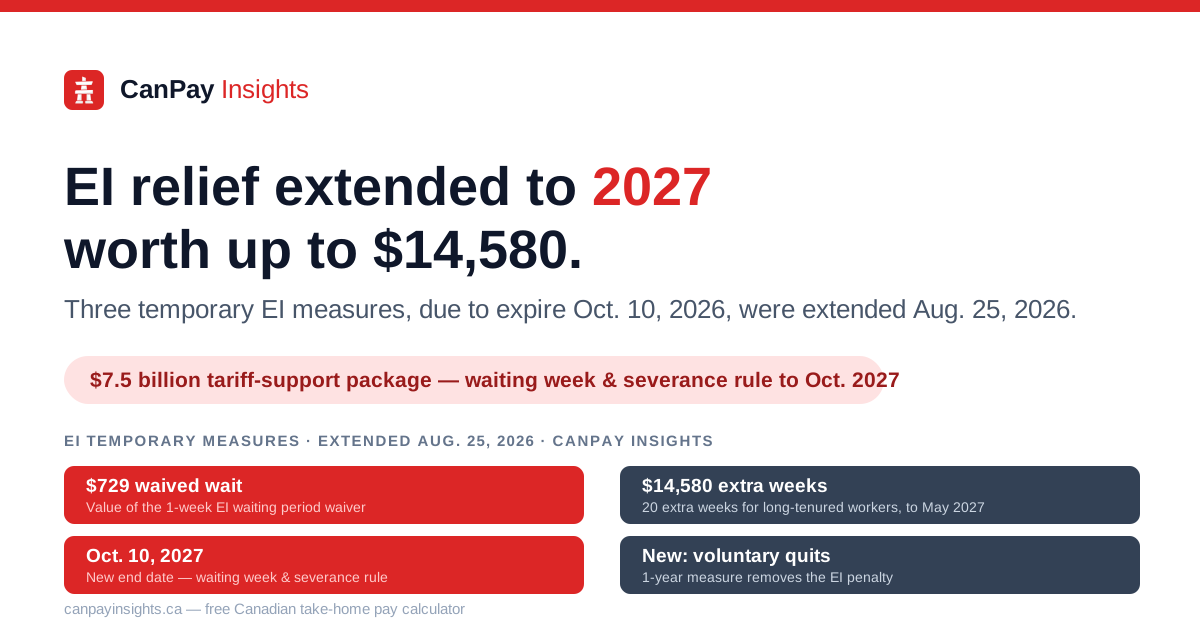
EI Relief for Laid-Off Workers Extended to 2027: What It Is Actually Worth
Three temporary EI measures that were due to expire October 10, 2026 were quietly extended into 2027 as part of an August 25 tariff-support package — the waived one-week wait is worth up to $729, and the extra 20 weeks for long-tenured workers up to $14,580.
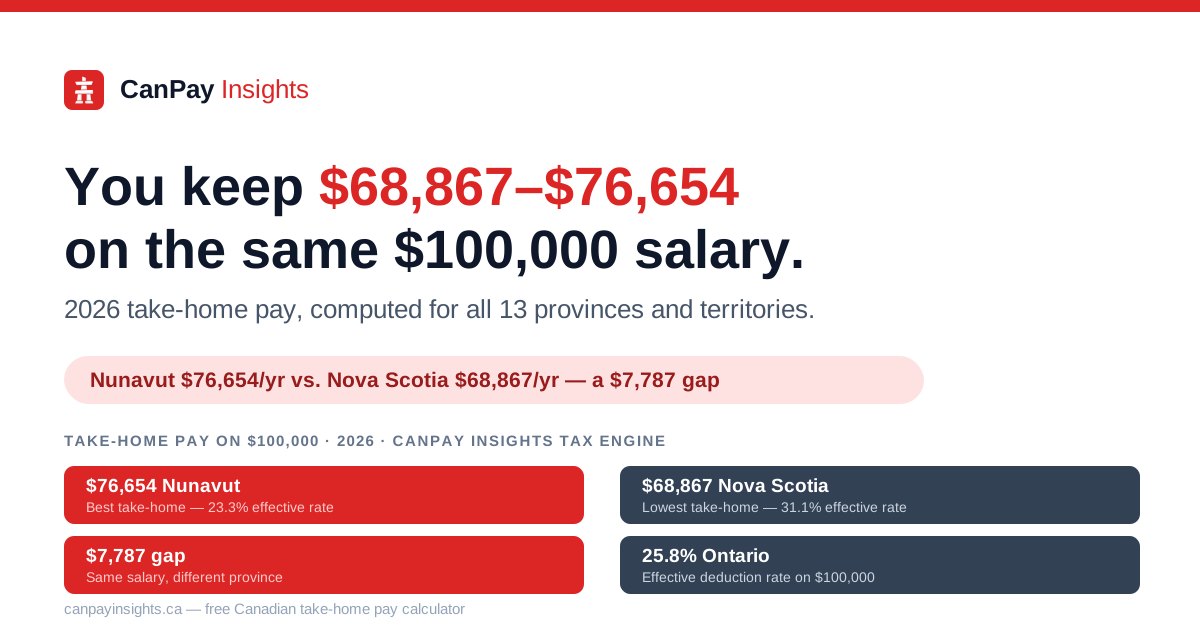
$100,000 Salary: What You Actually Take Home, Province by Province (2026)
A $100,000 salary nets $76,654 a year in Nunavut but only $68,867 in Nova Scotia — a $7,787 gap, almost all of it provincial tax. British Columbia overtakes the Northwest Territories at this income, a ranking flip that does not happen at $75,000. Exact 2026 take-home pay, tax, and deductions for all 13 provinces and territories.
TFSA vs RRSP in 2026: What $5,000 Saves You, Province by Province
Putting $5,000 into an RRSP in 2026 cuts income tax by $880 to $2,140 depending on salary and province. A TFSA saves nothing now but nothing is taxed later. The 2026 limits are $7,000 (TFSA) and $33,810 (RRSP).
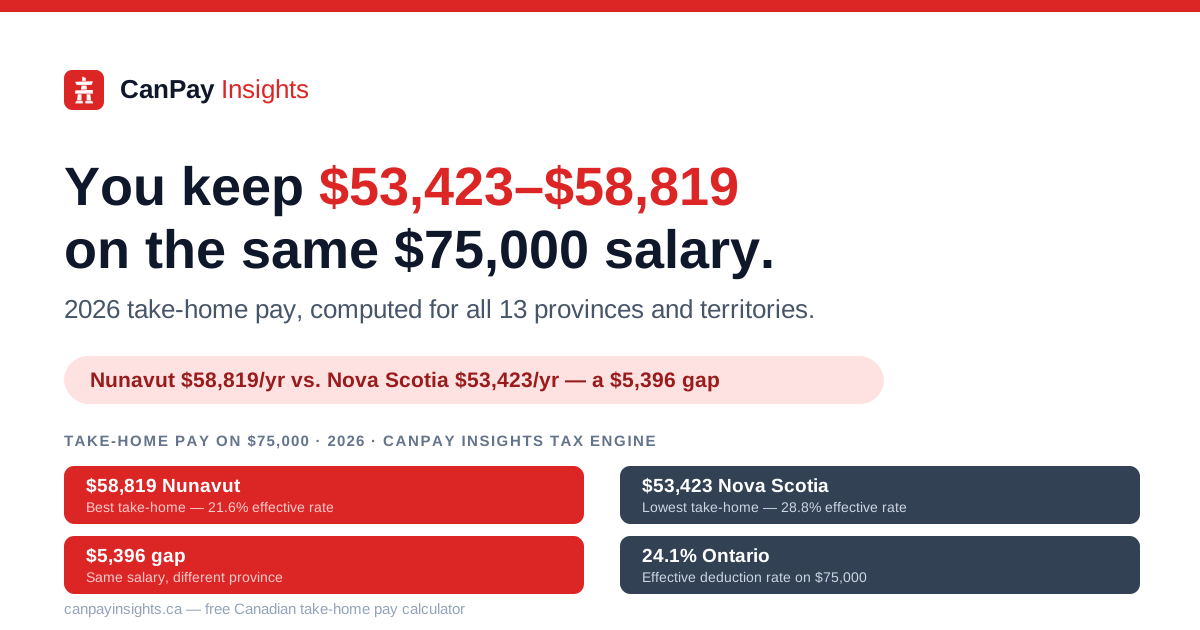
$75,000 Salary: What You Actually Take Home, Province by Province (2026)
A $75,000 salary nets $58,819 a year in Nunavut but only $53,423 in Nova Scotia — a $5,396 gap, almost all of it provincial tax. Exact 2026 take-home pay, tax, and deductions for all 13 provinces and territories.
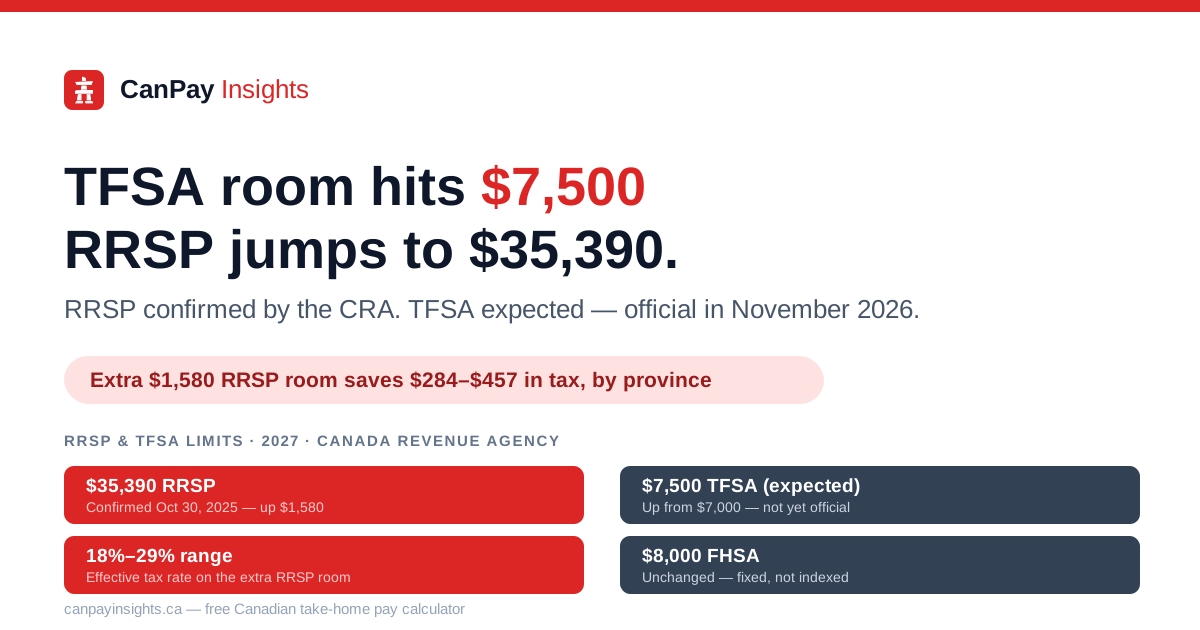
TFSA Room Set to Hit $7,500 in 2027 — RRSP Limit Confirmed at $35,390
The Canada Revenue Agency confirmed on October 30, 2025 that the 2027 RRSP dollar limit rises to $35,390, up $1,580 from $33,810. The 2027 TFSA limit isn't official yet, but the CPI-based indexing formula already points to $7,500, up from $7,000. Run through the CanPay Insights tax engine, the extra $1,580 of RRSP room is worth $284 to $457 in tax savings at a $90,000 salary, depending on province.
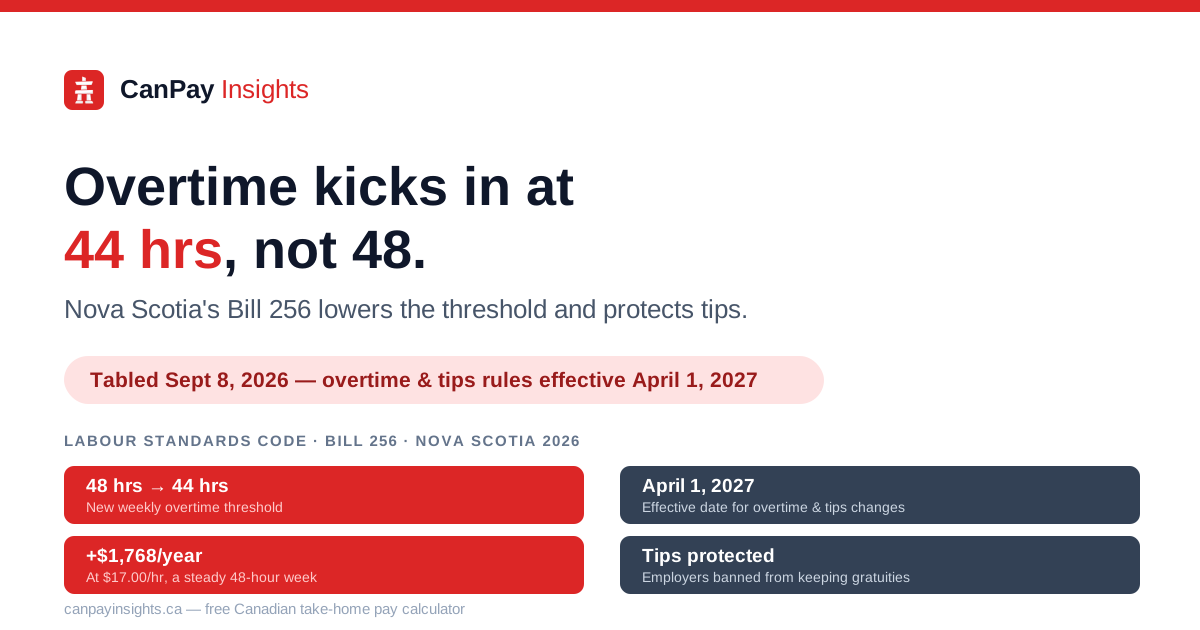
Nova Scotia's Overtime Threshold Drops to 44 Hours: What the Extra Hours Are Worth
Nova Scotia has tabled Bill 256, cutting the overtime threshold from 48 hours a week to 44 and giving legal protection to tips for the first time. The overtime and tips changes take effect April 1, 2027. We ran the math: a worker earning the province's $17.00 minimum wage who regularly works 48-hour weeks would earn about $1,768 more a year once those four hours switch from straight time to time-and-a-half.
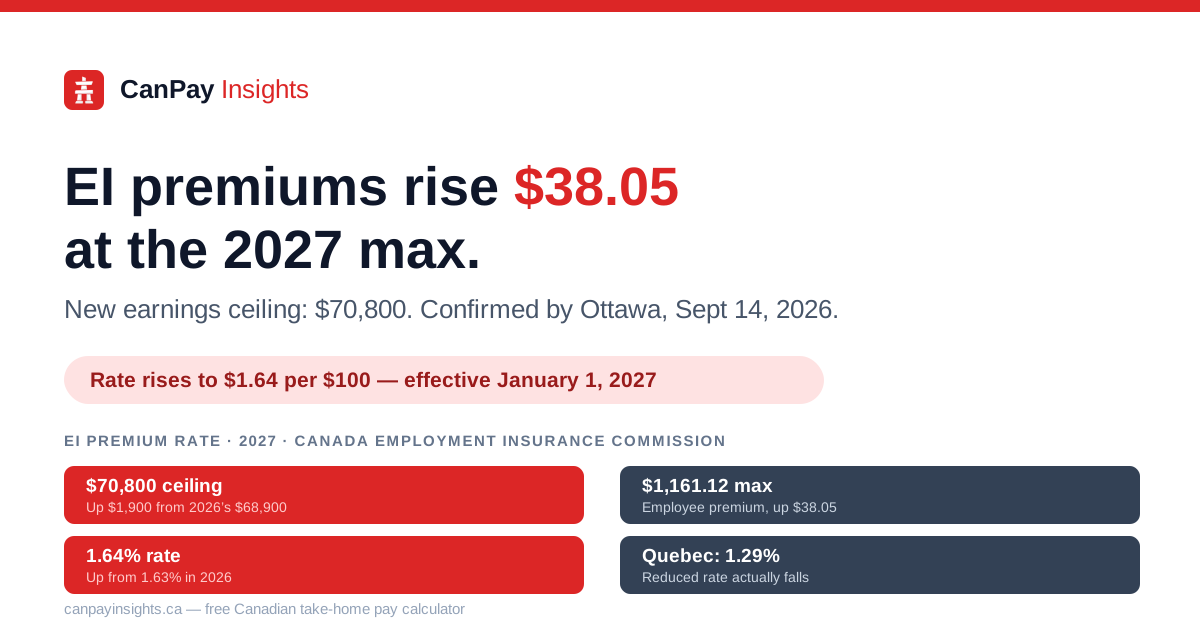
EI Premium Rate for 2027 Confirmed: Maximum Insurable Earnings Jumps to $70,800
The 2027 EI premium rate is confirmed at $1.64 per $100 of insurable earnings, and the earnings ceiling rises to $70,800 from $68,900. The maximum employee premium climbs $38.05, to $1,161.12; most workers below the old ceiling see a smaller $4–$7 increase. Quebec's reduced rate actually falls slightly, to 1.29%.
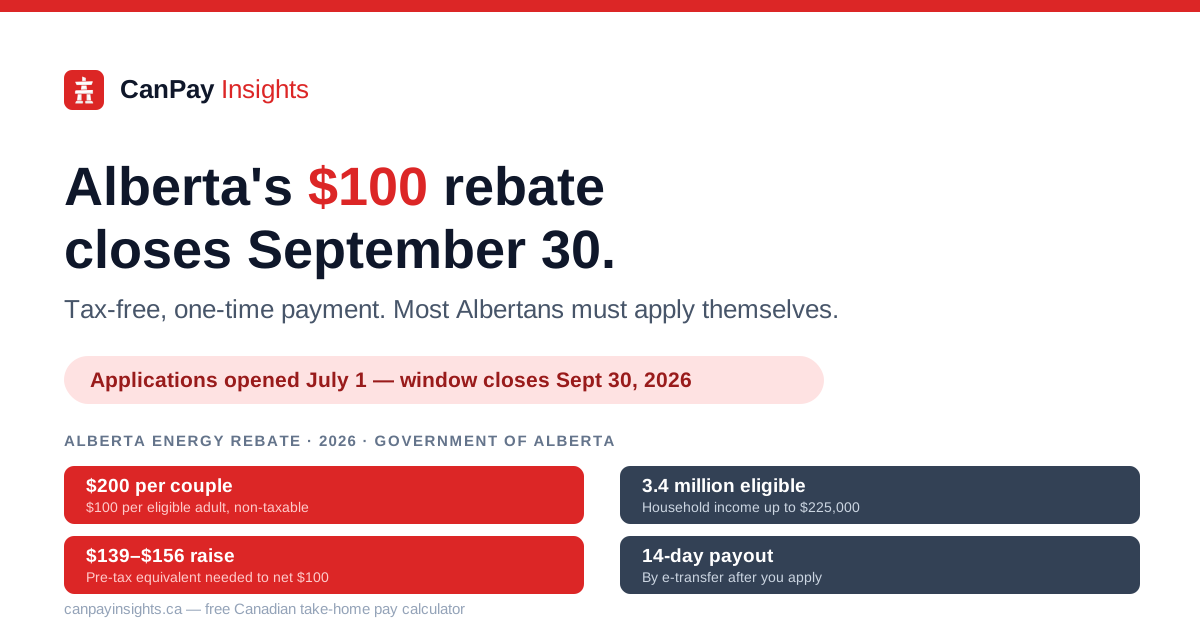
Alberta's $100 Energy Rebate: Apply by September 30, 2026 or Miss Out
Alberta's one-time Energy Rebate pays $100 per eligible adult (up to $200 for a couple) to residents 18+ who filed a 2025 tax return and have household income of $225,000 or less. Applications close September 30, 2026. Because the rebate is non-taxable, we ran it through the CanPay Insights tax engine: at most Alberta income levels, it takes a $139 to $156 pre-tax raise to net the same $100 after federal tax, provincial tax, CPP, and EI.
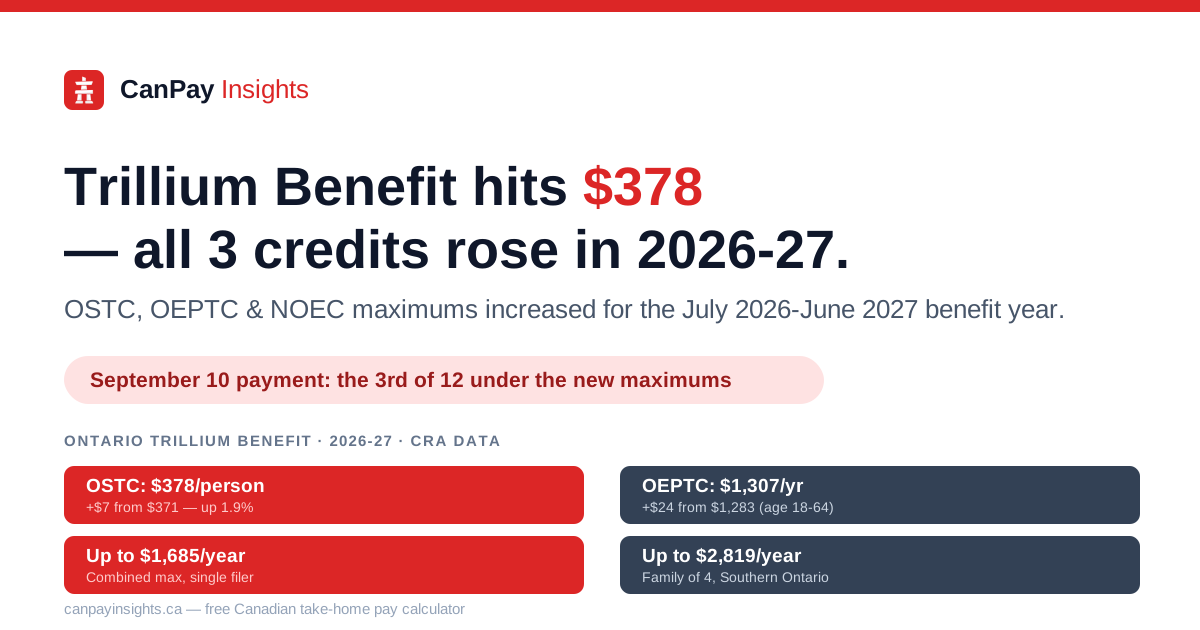
Ontario Trillium Benefit Hits $378, $1,307 in 2026-27
The Ontario Trillium Benefit's three components all rose for the 2026-27 benefit year: the Ontario Sales Tax Credit maxes out at $378 per person (up from $371), the Ontario Energy and Property Tax Credit at $1,307 for adults under 65 (up from $1,283), and the Northern Ontario Energy Credit at $189 for singles (up from $185). The September 10, 2026 payment was the third of twelve under the new rates.
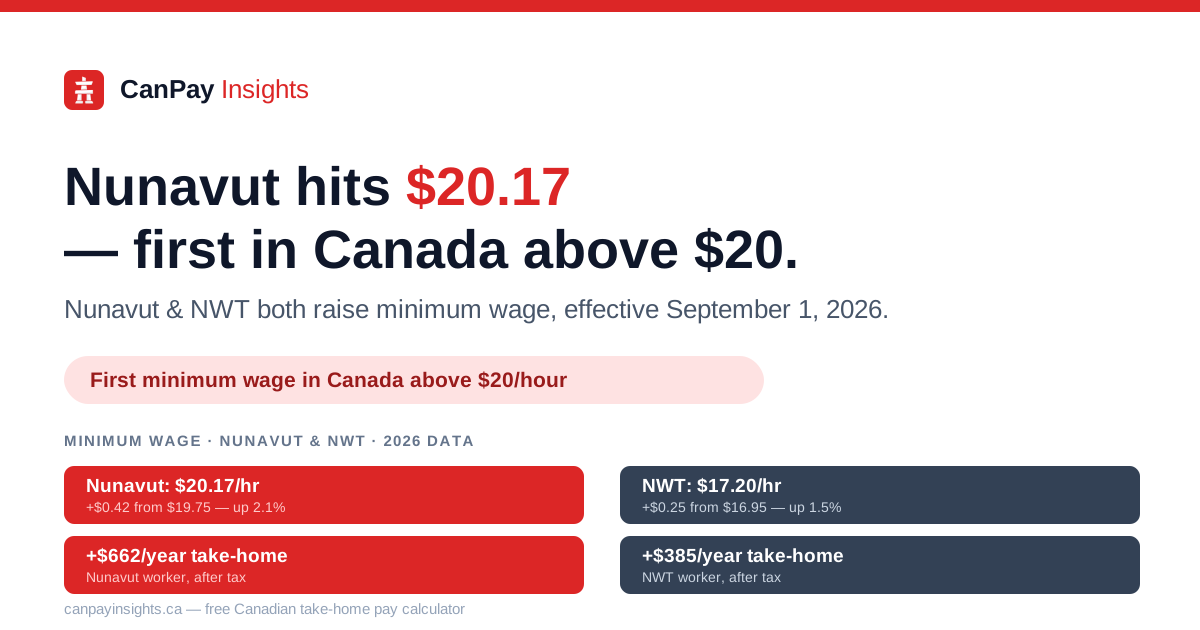
Nunavut's Minimum Wage Hits $20.17 — First in Canada Above $20, Effective September 1, 2026
Nunavut's minimum wage rose to $20.17 an hour on September 1, 2026 — the first minimum wage in Canada to cross $20, and now more than $2 above the federal minimum wage. The Northwest Territories raised its own rate to $17.20 the same day. After federal tax, territorial tax, CPP, and EI, a full-time Nunavut worker gains about $662 a year; a full-time NWT worker gains about $385.
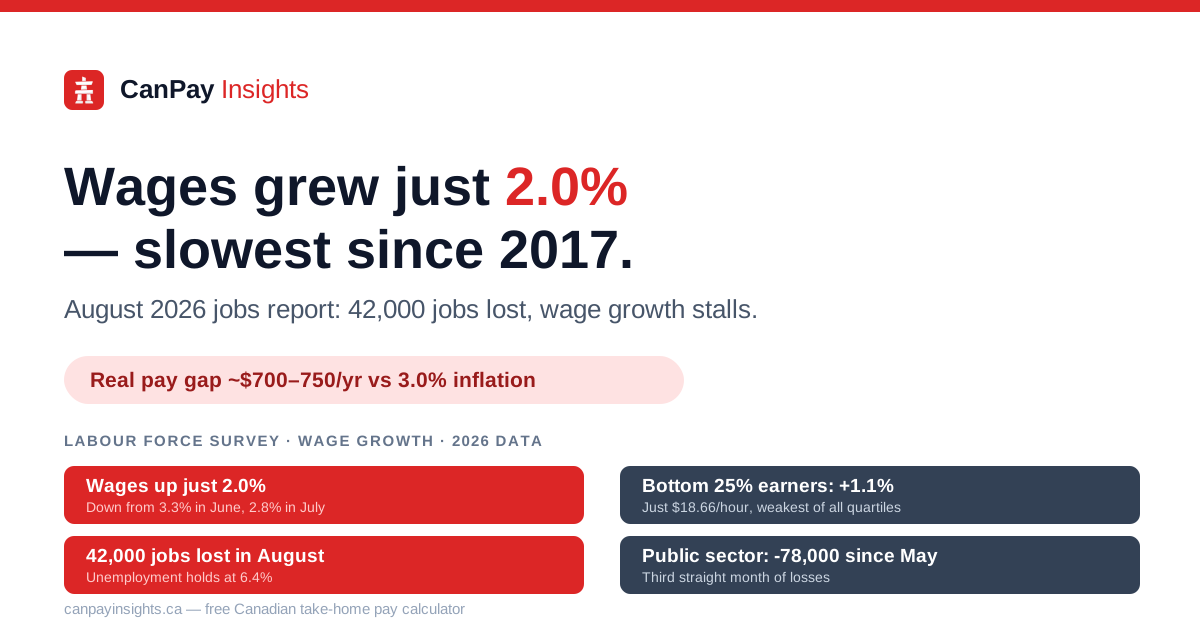
Wage Growth Falls to 2.0% in August 2026 — Slowest Since 2017, and Low-Wage Workers Fell Furthest Behind
Average hourly wages grew just 2.0% year-over-year in August 2026 — the slowest pace since November 2017 outside the pandemic — as the economy shed 42,000 jobs. Against the most recent 3.0% inflation reading, that is a real wage gap of roughly $700 to $750 a year after tax for the average full-time worker, and the bottom 25% of earners, at $18.66/hour, got the smallest raise of all: just 1.1%.
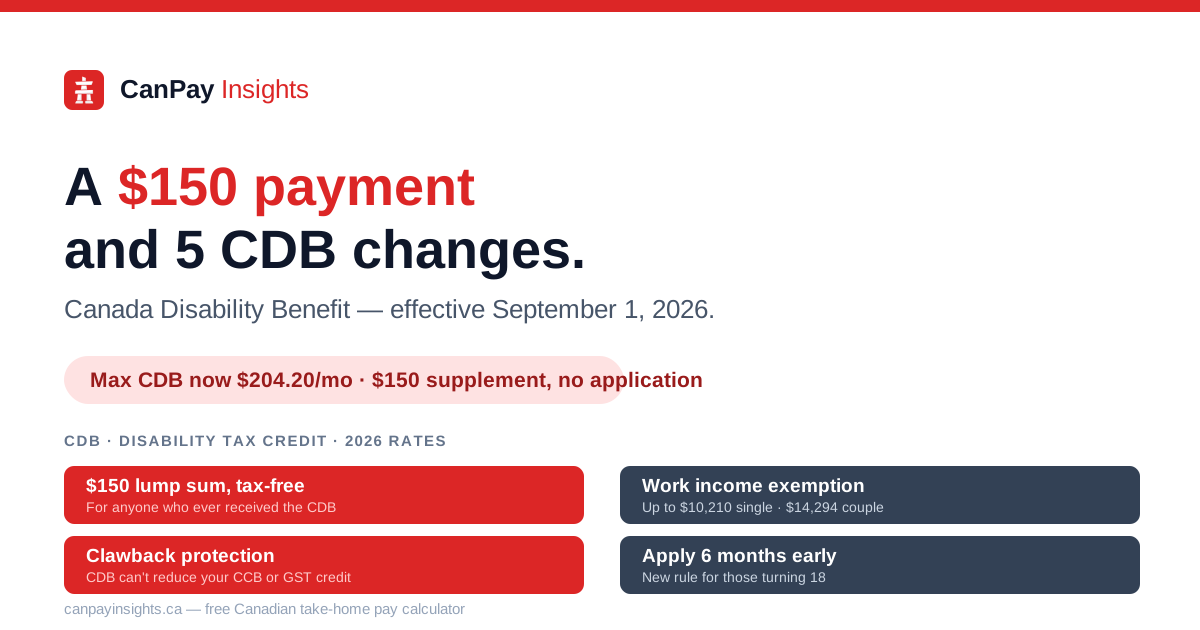
Canada Disability Benefit: $150 Payment and 5 Regulatory Changes, Effective September 1, 2026
Five changes to the Canada Disability Benefit take legal effect September 1, 2026, led by a tax-free $150 lump-sum payment for anyone who has ever received the CDB — no application required. Here is every change, the current $204.20 monthly maximum, and how much you can earn from work before it is reduced.
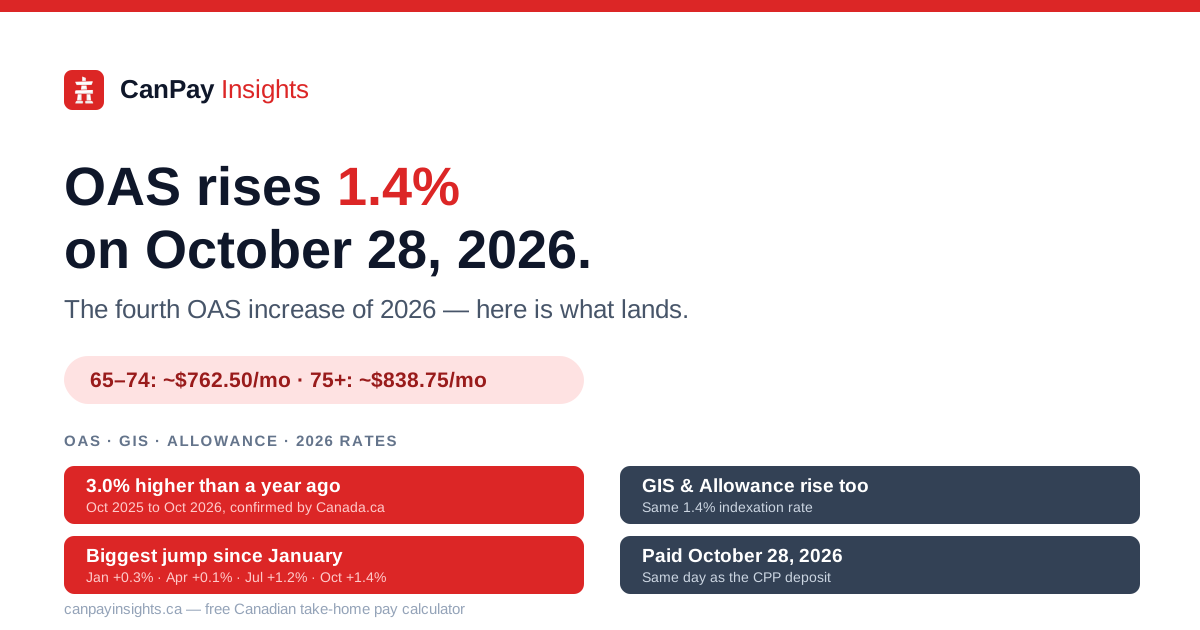
OAS Rises 1.4% on October 28, 2026 — What Every Age Group Actually Gets
OAS payments increase 1.4% for the October–December 2026 quarter, arriving with the October 28 deposit — pushing the maximum monthly pension to roughly $762.50 for ages 65–74 and $838.75 for 75-and-over. Combined with three earlier 2026 increases, that is a confirmed 3.0% rise over the past year. GIS and the Allowance rise by the same 1.4%.
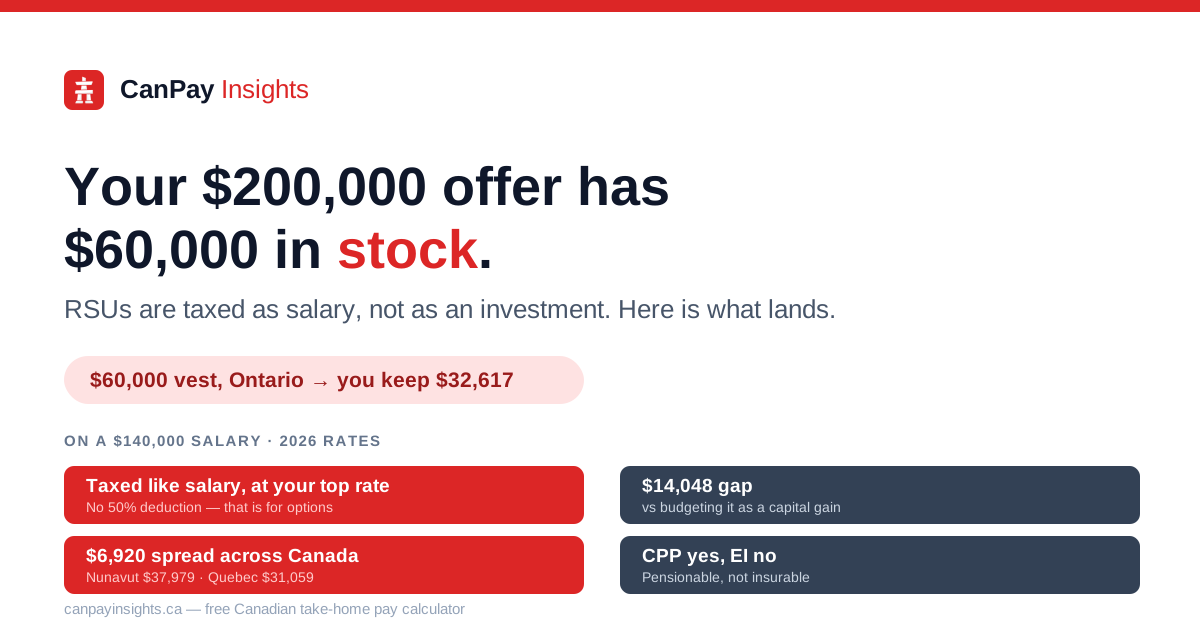
Your $200,000 Offer Has $60,000 in Stock. Here Is What Lands.
A $60,000 RSU grant vesting in Ontario on a $140,000 salary leaves $32,617 after tax and CPP. Anyone budgeting it as a capital gain would expect $46,683 — a gap of $14,066. RSUs are employment income in full: no 50% deduction, taxed at the marginal rate.
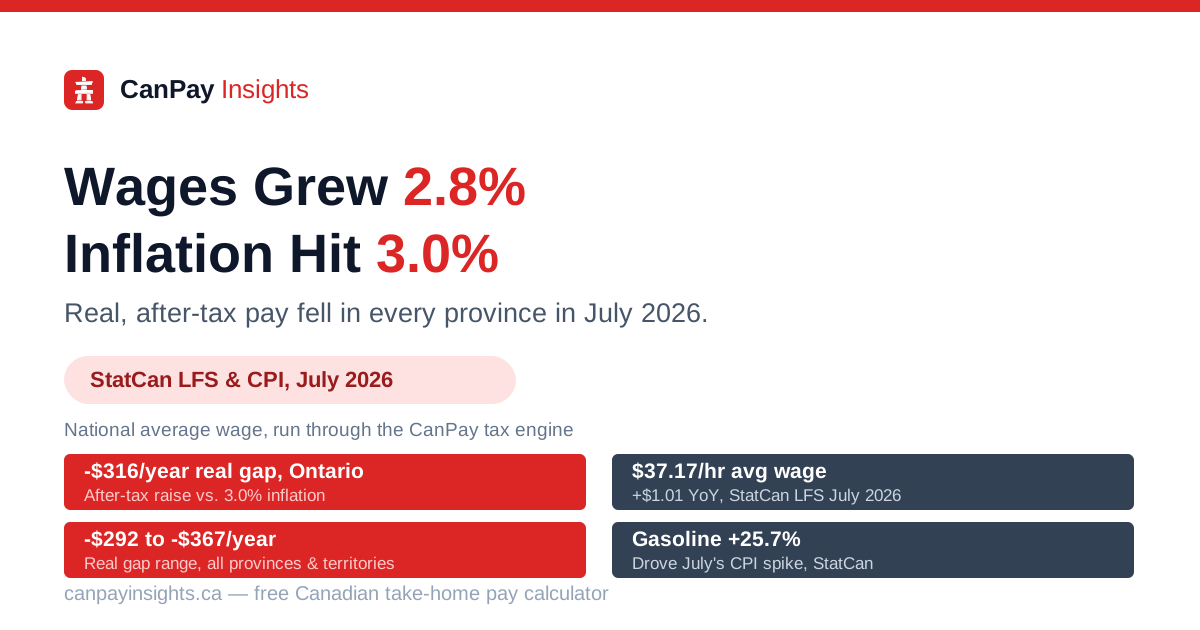
Wages Rose 2.8% in July 2026 — Inflation Hit 3.0%, So Real Pay Fell
Average hourly wages rose 2.8% year-over-year in July 2026, but the Consumer Price Index rose 3.0% — a negative real wage gap. Run through the CanPay Insights tax engine, that costs a full-time worker on the national average wage roughly $290 to $370 a year in after-tax purchasing power, depending on province.
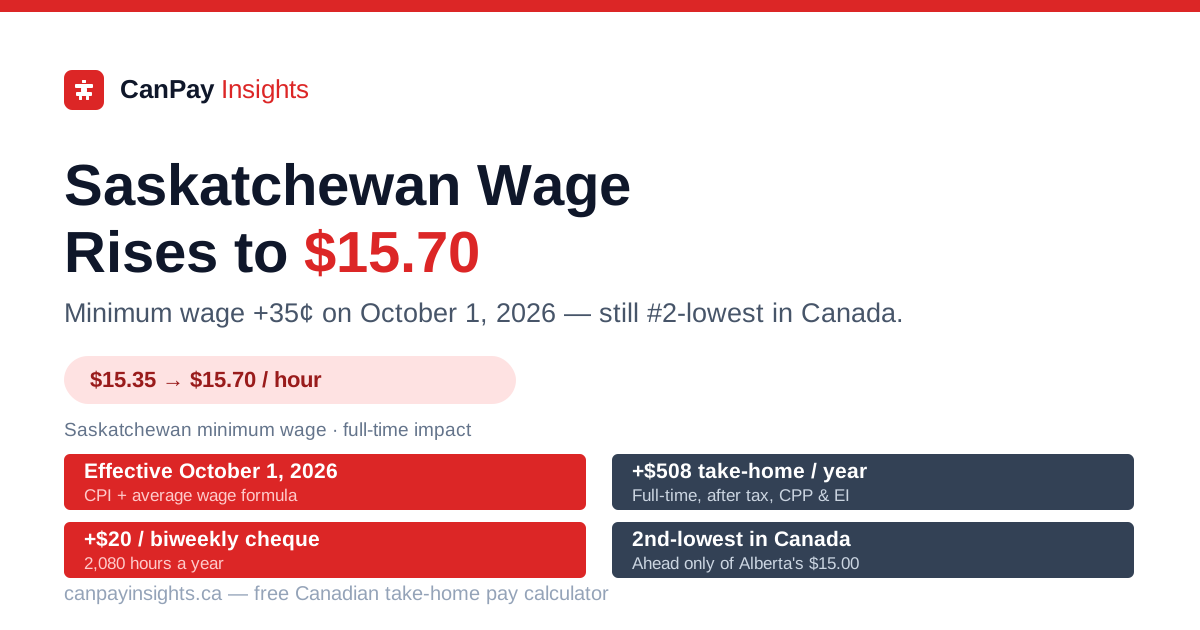
Saskatchewan's Minimum Wage Rose to $15.70 on October 1, 2026
Saskatchewan's minimum wage rose from $15.35 to $15.70 on October 1, 2026, a 35-cent increase under the province's CPI-and-wages formula. A full-time worker gained about $508 more take-home pay a year — and Saskatchewan stays Canada's second-lowest minimum wage, just above Alberta's frozen $15.00.
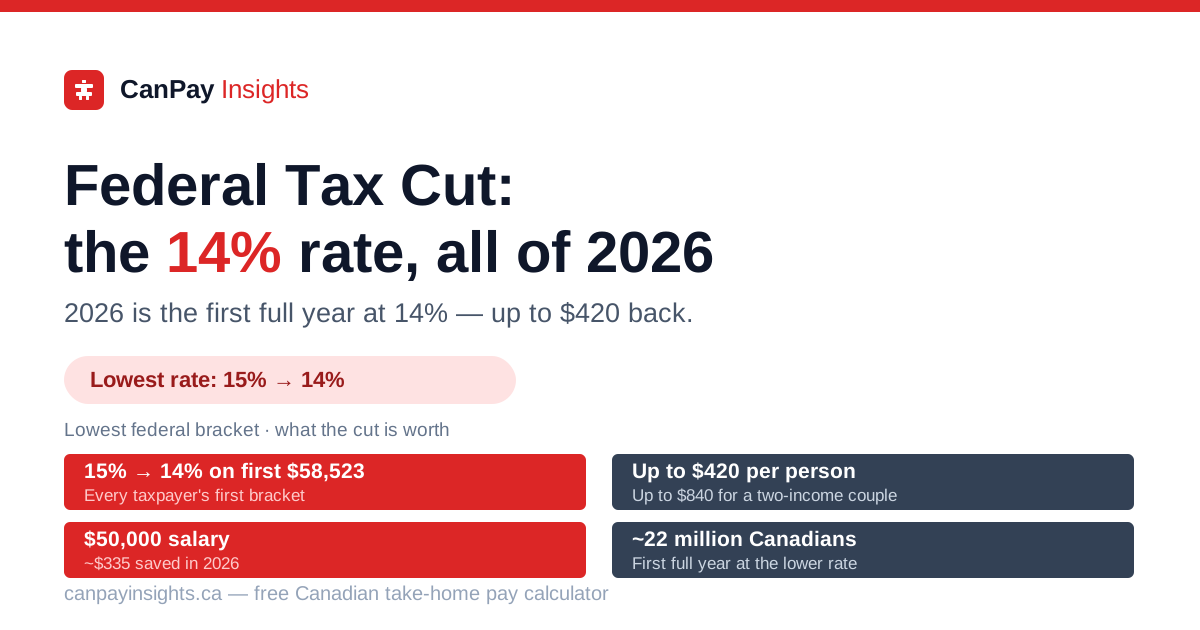
The 14% Federal Tax Cut: 2026 Is the First Full Year — Up to $420 Back
The lowest federal tax rate dropped from 15% to 14%. 2025 was a blended 14.5% because the cut landed mid-year; 2026 is the first full year at 14%, so it delivers the full benefit — up to $420 per person. Here's what it adds to your take-home pay by salary.
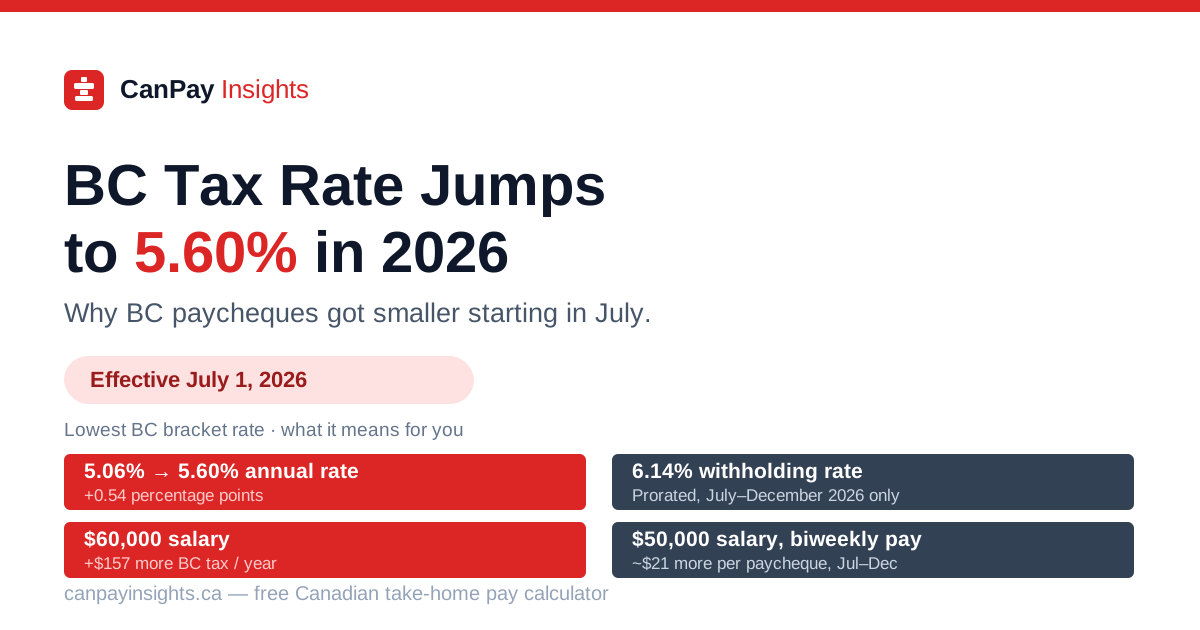
BC Tax Rate Jumps to 5.60%: Why Your Paycheque Shrank in July 2026
BC's February 2026 budget raised the province's lowest tax rate from 5.06% to 5.60%. Because payroll tables didn't catch up until July, the CRA is withholding BC tax at a prorated 6.14% rate from July through December 2026 — which is why BC paycheques got smaller starting with the first July payday.
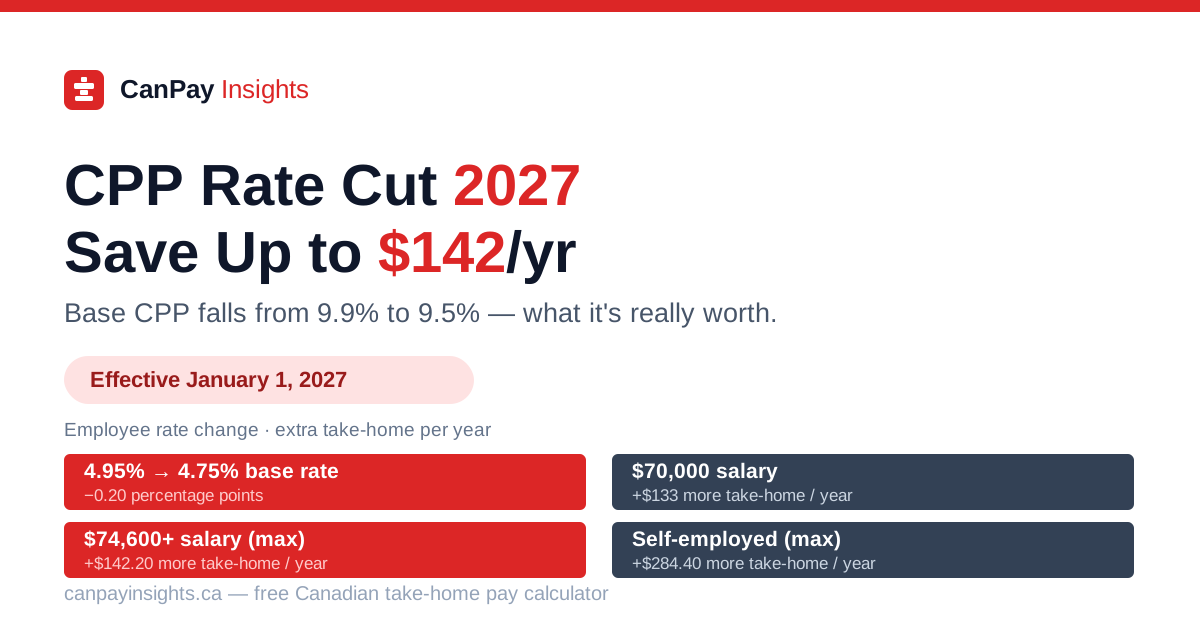
CPP Contribution Rate Cut 2027: What It Actually Saves You
Bill C-30 cuts the base CPP contribution rate from 4.95% to 4.75% for employees starting January 1, 2027 — worth up to $142.20 more take-home pay a year for anyone earning $74,600 or more, and about $133 for a worker on $70,000. Self-employed Canadians save roughly double.
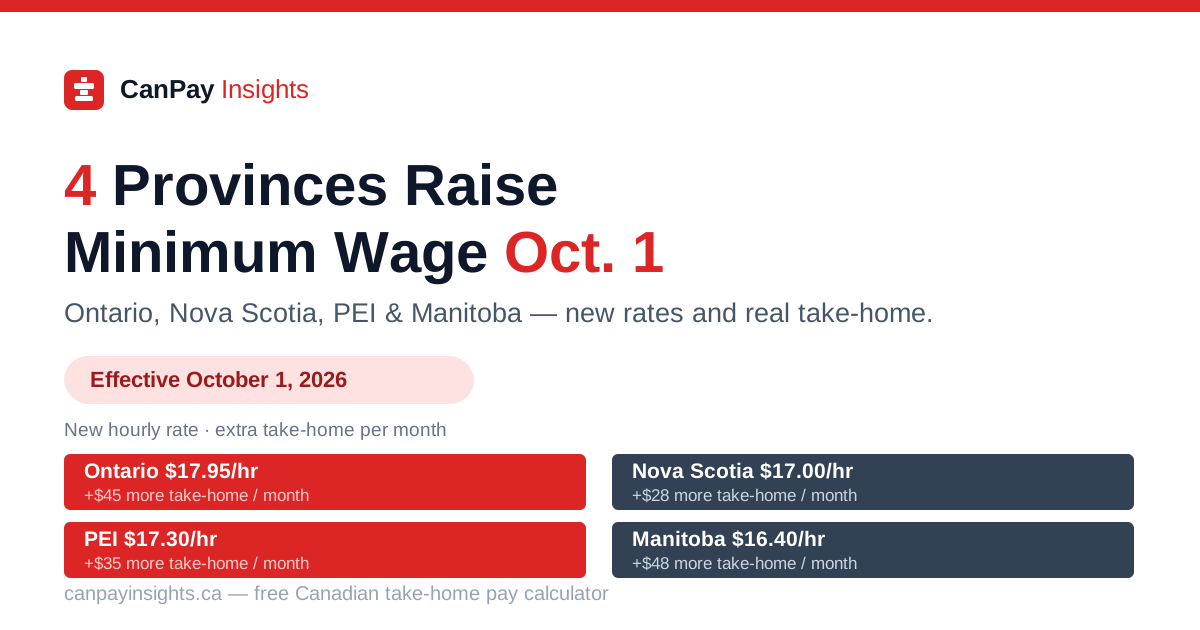
Minimum Wage Rose in 5 Provinces on October 1, 2026: What It Means for Your Paycheque
Five provinces raised minimum wage on October 1, 2026: Ontario to $17.95, Saskatchewan to $15.70, Nova Scotia to $17.00, PEI to $17.30, and Manitoba to $16.40. A full-time Ontario worker gained about $501 a year after tax; a Manitoba worker gained about $578.
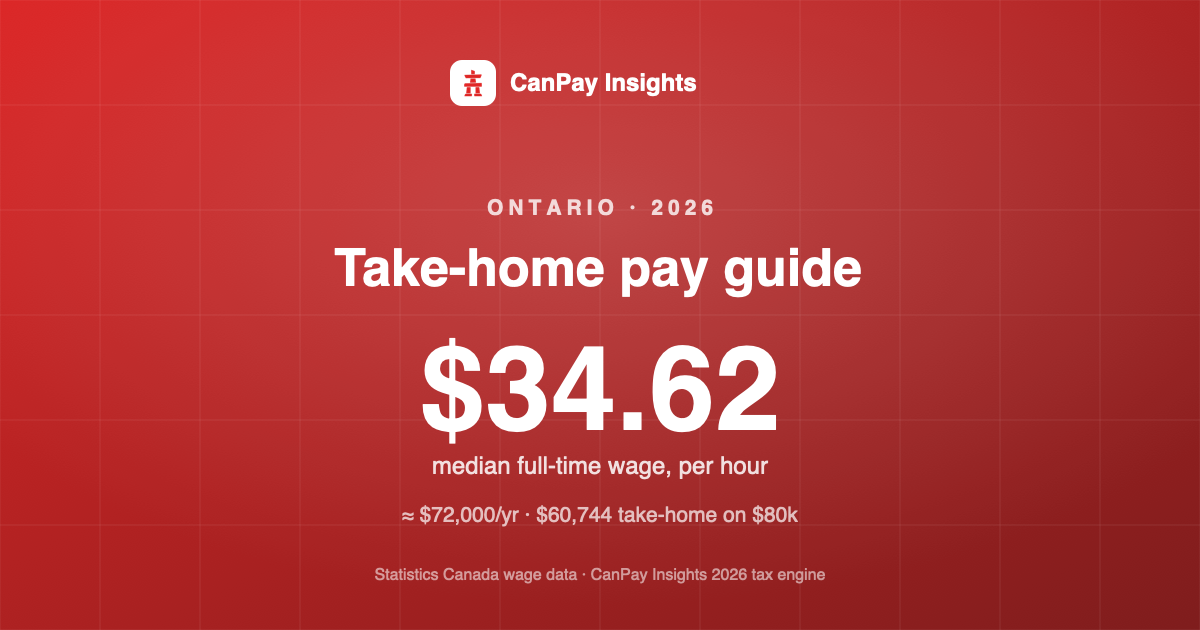
Ontario Take-Home Pay Guide 2026: Real Wages, Real Deductions
The median full-time wage in Ontario is $34.62 an hour. Here is what that, and every other salary level, leaves after 2026 tax — with Statistics Canada wage data for every industry.
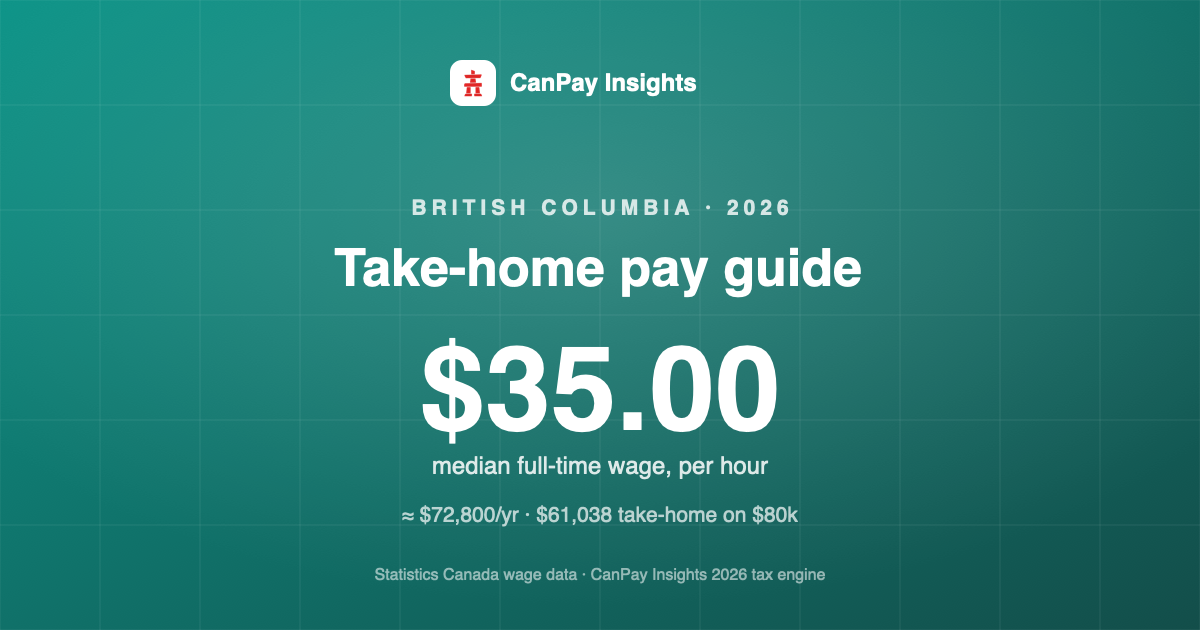
British Columbia Take-Home Pay Guide 2026: Real Wages, Real Deductions
The median full-time wage in British Columbia is $35.00 an hour. Here is what that, and every other salary level, leaves after 2026 tax — with Statistics Canada wage data for every industry.
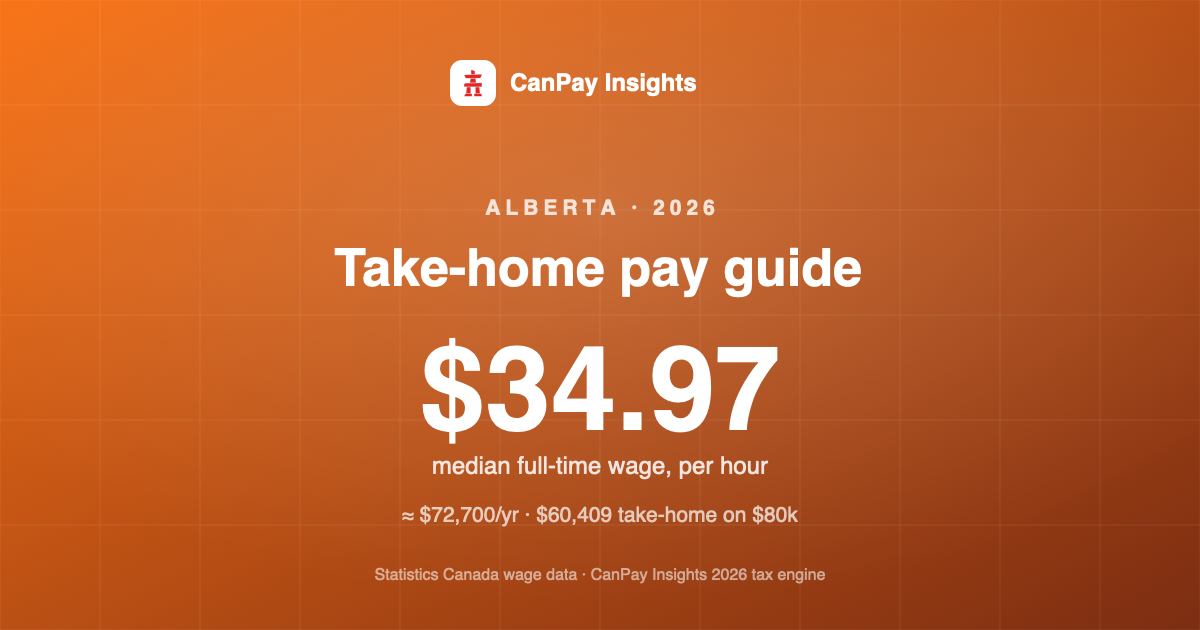
Alberta Take-Home Pay Guide 2026: Real Wages, Real Deductions
The median full-time wage in Alberta is $34.97 an hour. Here is what that, and every other salary level, leaves after 2026 tax — with Statistics Canada wage data for every industry.
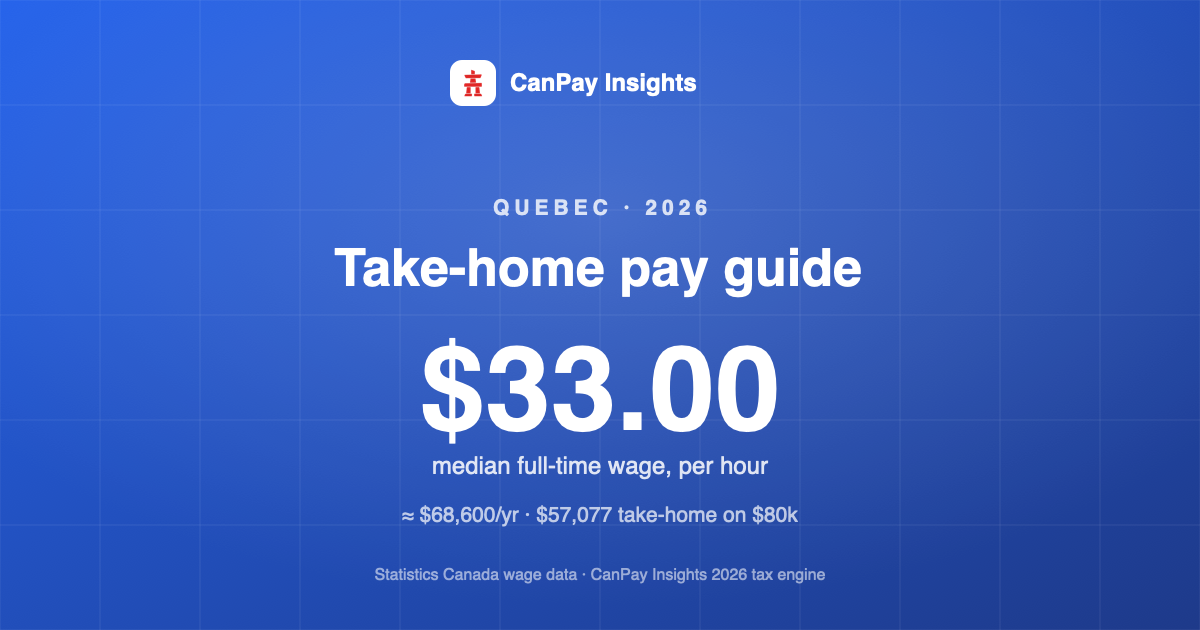
Quebec Take-Home Pay Guide 2026: Real Wages, Real Deductions
The median full-time wage in Quebec is $33.00 an hour. Here is what that, and every other salary level, leaves after 2026 tax — with Statistics Canada wage data for every industry.
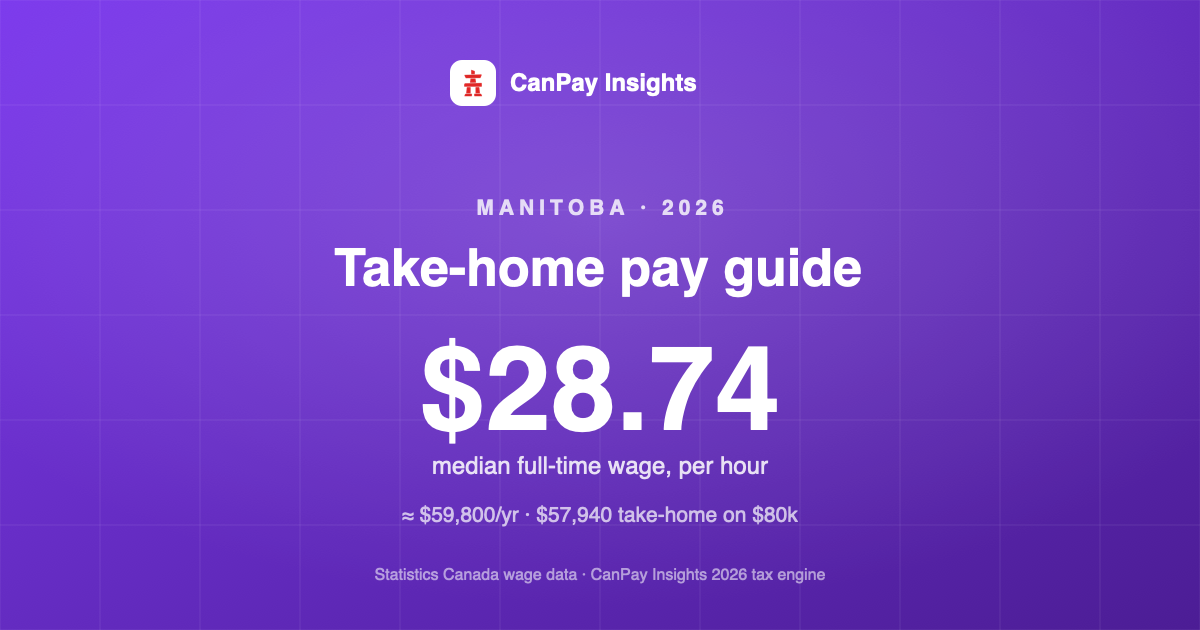
Manitoba Take-Home Pay Guide 2026: Real Wages, Real Deductions
The median full-time wage in Manitoba is $28.74 an hour. Here is what that, and every other salary level, leaves after 2026 tax — with Statistics Canada wage data for every industry.
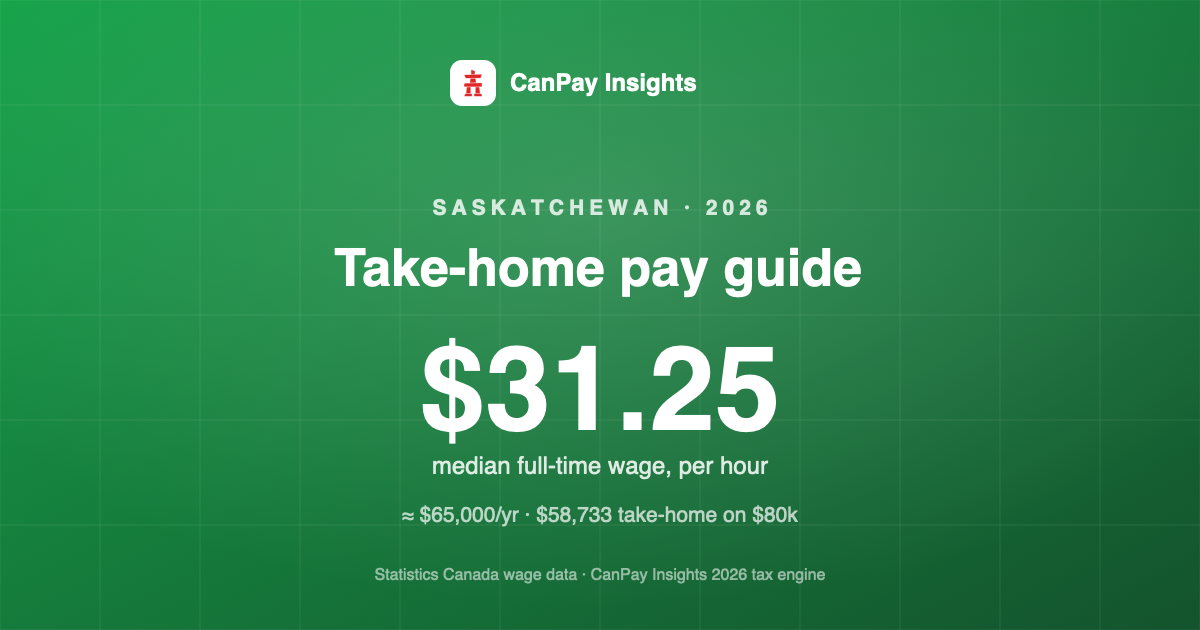
Saskatchewan Take-Home Pay Guide 2026: Real Wages, Real Deductions
The median full-time wage in Saskatchewan is $31.25 an hour. Here is what that, and every other salary level, leaves after 2026 tax — with Statistics Canada wage data for every industry.
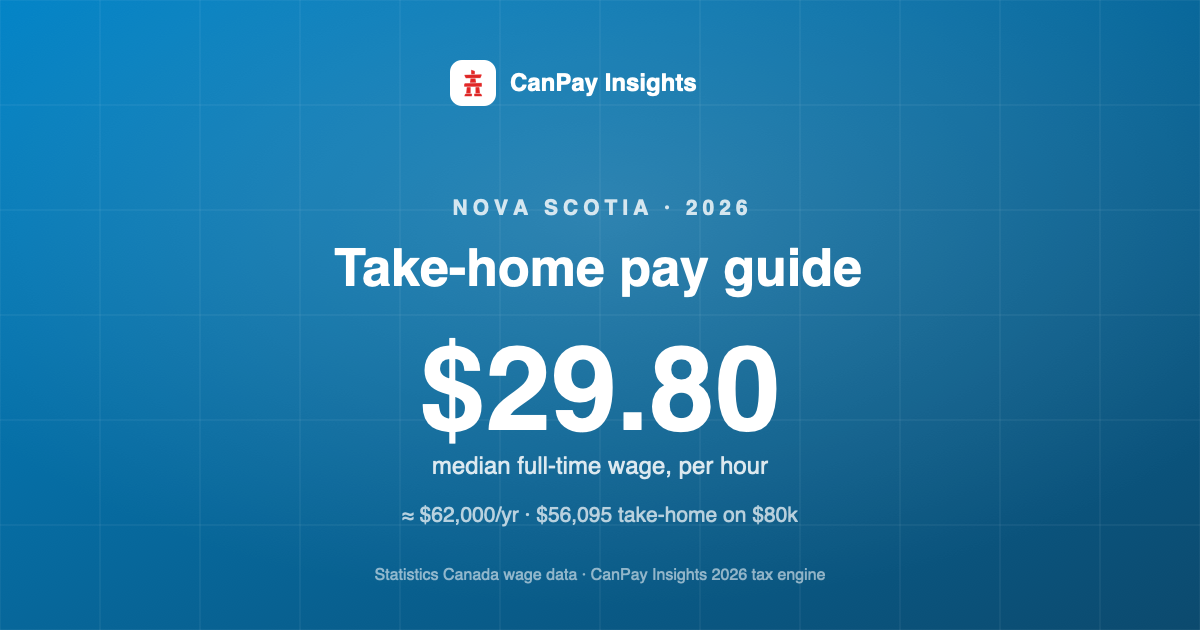
Nova Scotia Take-Home Pay Guide 2026: Real Wages, Real Deductions
The median full-time wage in Nova Scotia is $29.80 an hour. Here is what that, and every other salary level, leaves after 2026 tax — with Statistics Canada wage data for every industry.
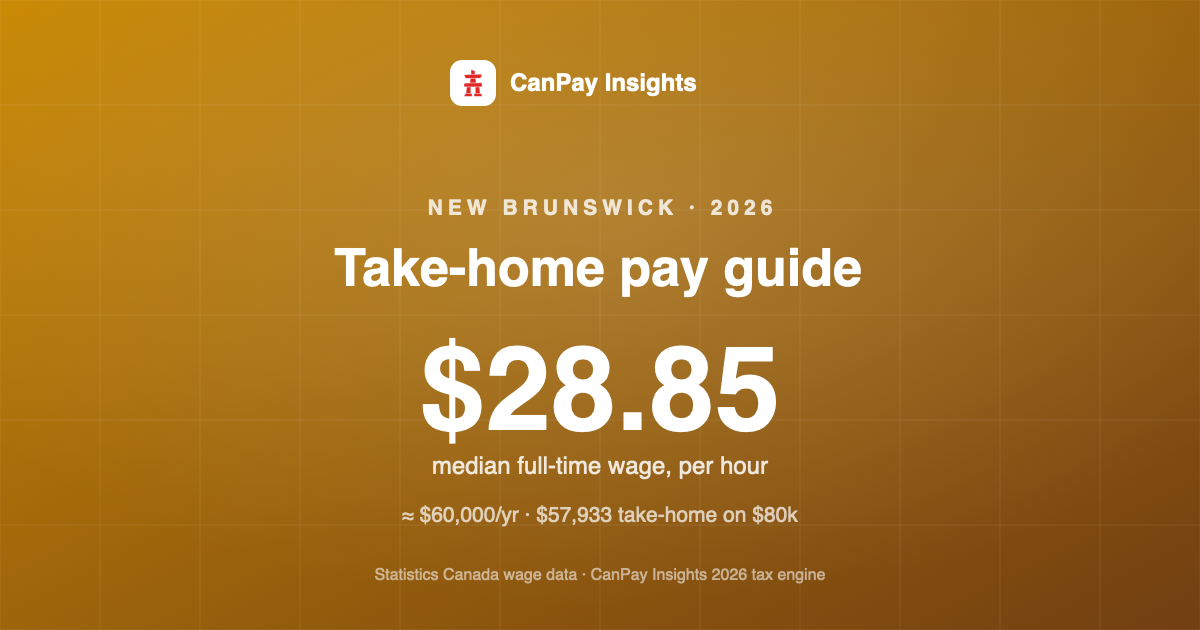
New Brunswick Take-Home Pay Guide 2026: Real Wages, Real Deductions
The median full-time wage in New Brunswick is $28.85 an hour. Here is what that, and every other salary level, leaves after 2026 tax — with Statistics Canada wage data for every industry.
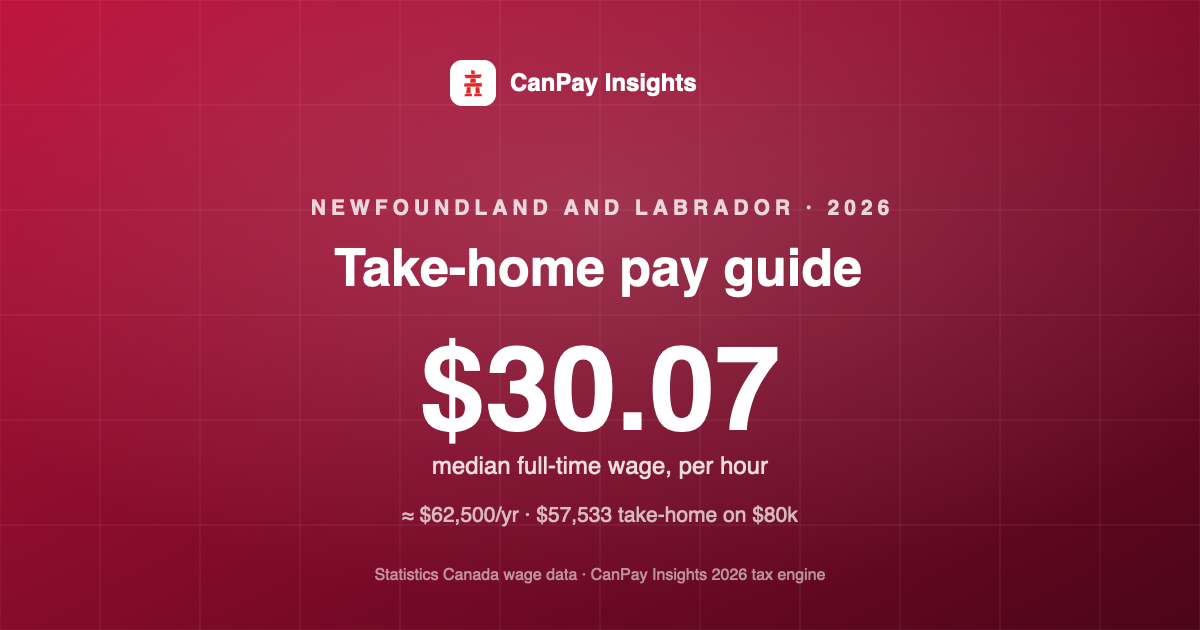
Newfoundland and Labrador Take-Home Pay Guide 2026: Real Wages, Real Deductions
The median full-time wage in Newfoundland and Labrador is $30.07 an hour. Here is what that, and every other salary level, leaves after 2026 tax — with Statistics Canada wage data for every industry.
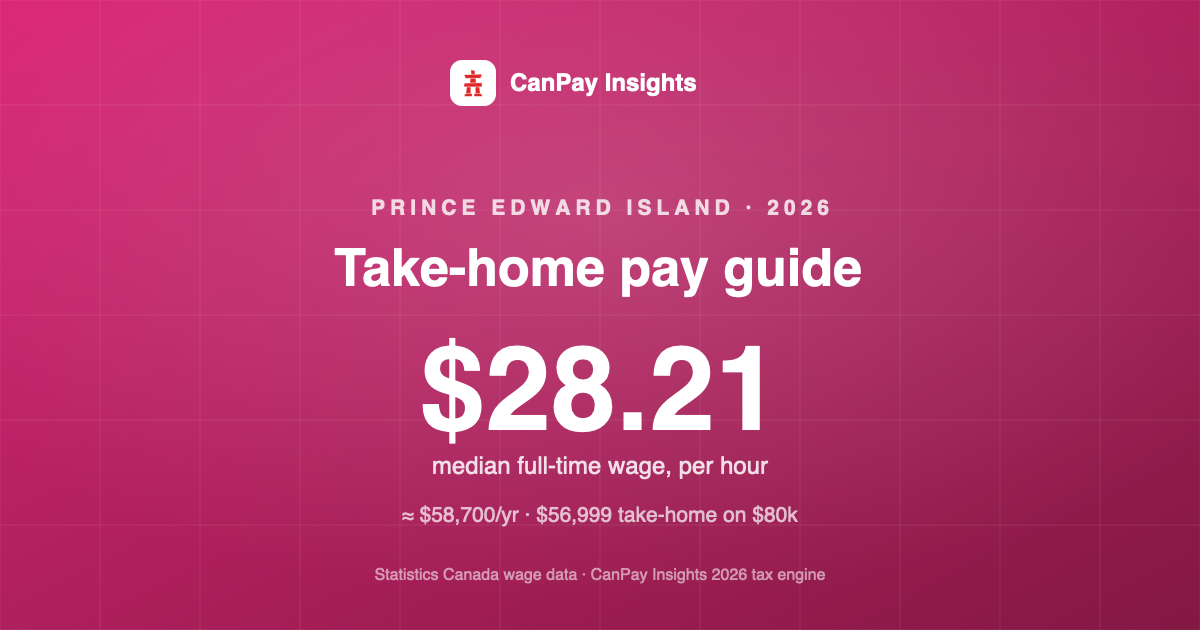
Prince Edward Island Take-Home Pay Guide 2026: Real Wages, Real Deductions
The median full-time wage in Prince Edward Island is $28.21 an hour. Here is what that, and every other salary level, leaves after 2026 tax — with Statistics Canada wage data for every industry.
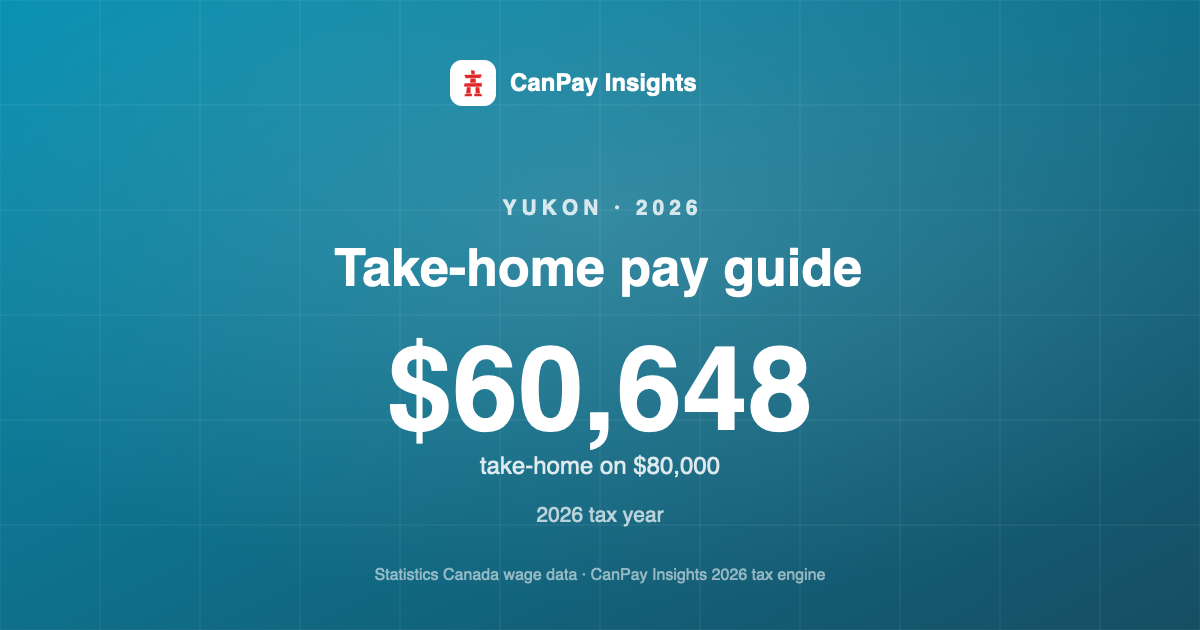
Yukon Take-Home Pay Guide 2026: Real Wages, Real Deductions
What salaries in Yukon leave after federal and territorial tax, CPP and EI in 2026, and how the territory compares with the rest of Canada.
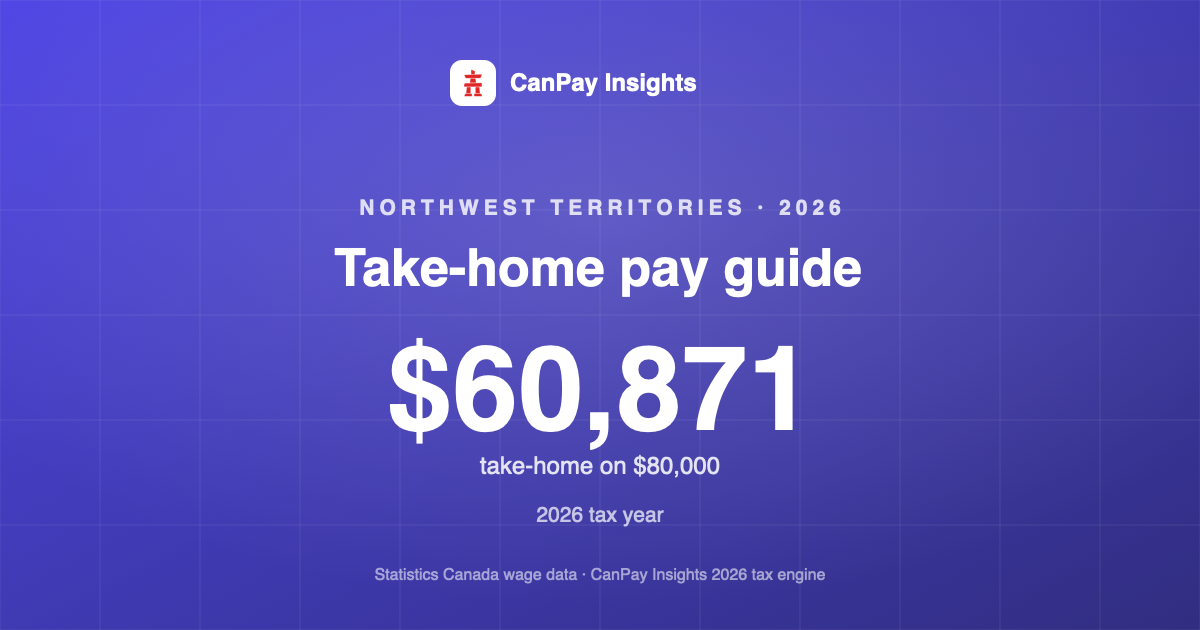
Northwest Territories Take-Home Pay Guide 2026: Real Wages, Real Deductions
What salaries in Northwest Territories leave after federal and territorial tax, CPP and EI in 2026, and how the territory compares with the rest of Canada.
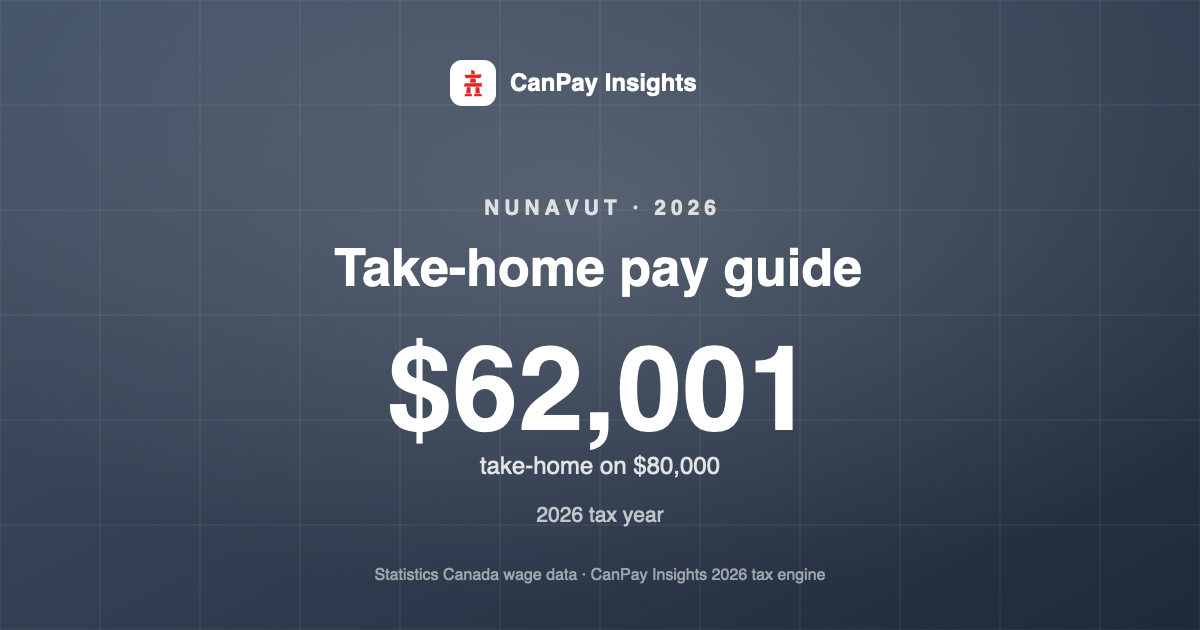
Nunavut Take-Home Pay Guide 2026: Real Wages, Real Deductions
What salaries in Nunavut leave after federal and territorial tax, CPP and EI in 2026, and how the territory compares with the rest of Canada.
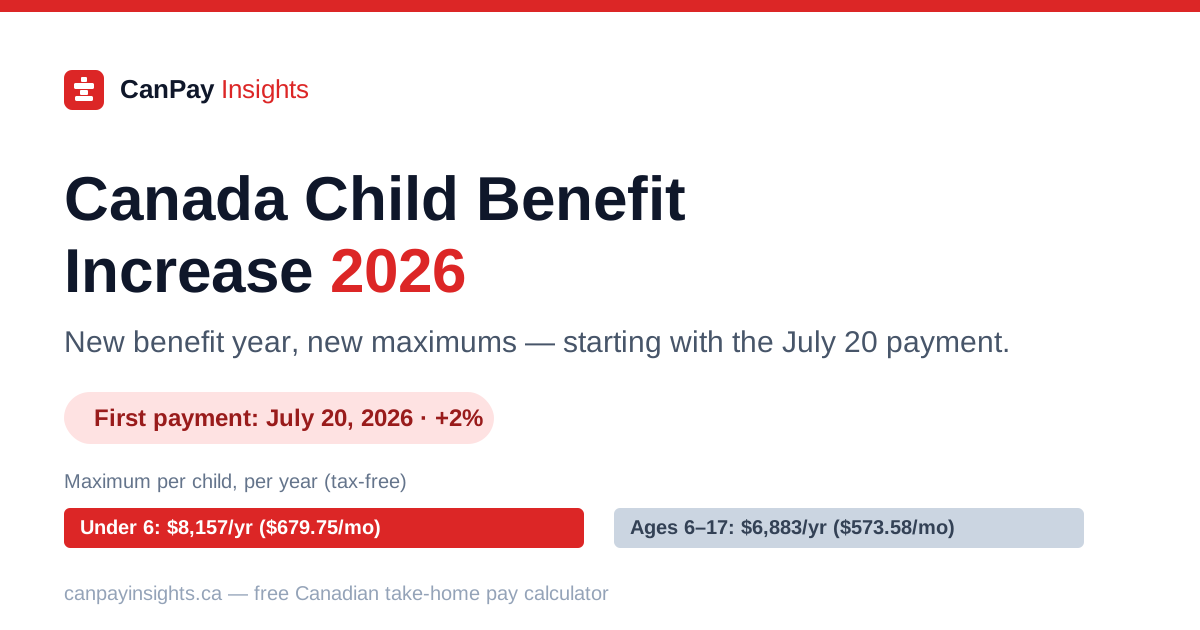
Canada Child Benefit Increase 2026: New Amounts From the July 20 Payment
The Canada Child Benefit rises 2% for the July 2026–June 2027 benefit year. Here are the new monthly and annual maximums, the income cut-off for the full amount, and when the higher payments start.
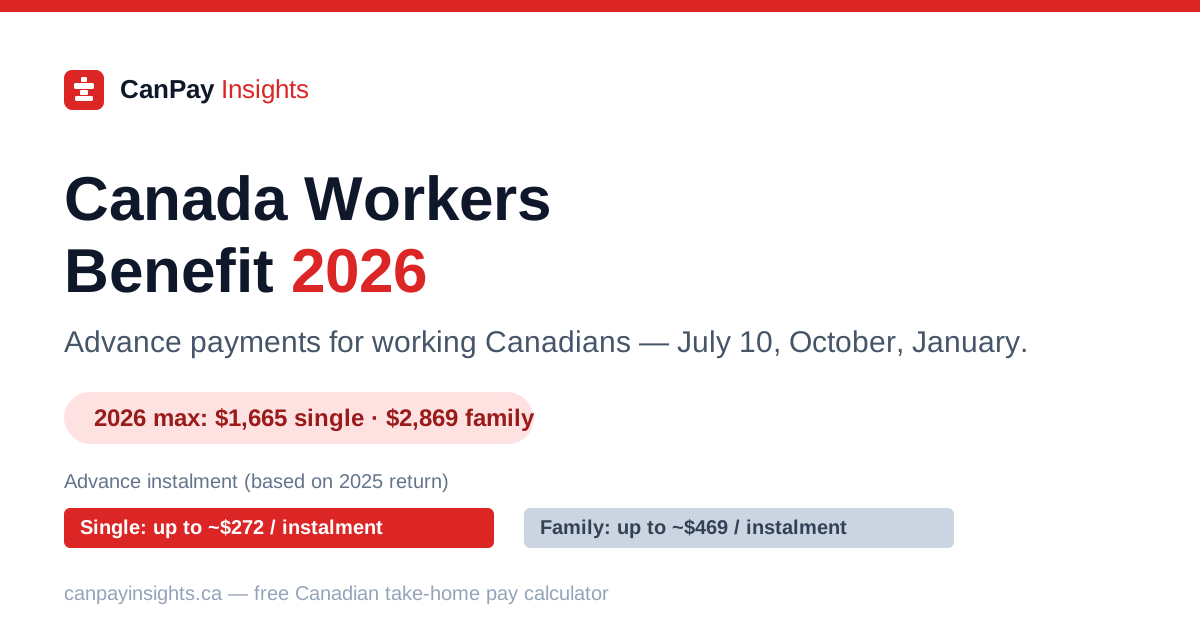
Canada Workers Benefit 2026: New Amounts and the July 10 Advance Payment
The Advanced Canada Workers Benefit paid its first 2026-27 instalment on July 10, 2026. Who qualifies, how much the advances are, the new 2026 maximums, and the October and January payment dates.
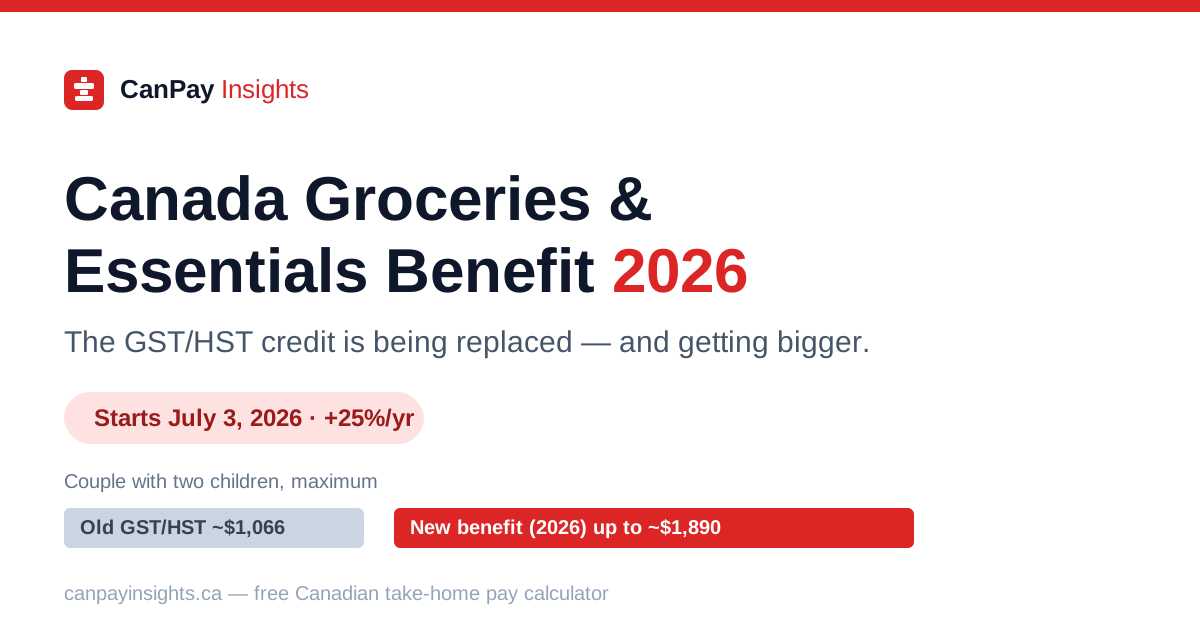
Canada Groceries and Essentials Benefit 2026: Who Gets How Much (and When)
Ottawa is replacing the GST/HST credit with the Canada Groceries and Essentials Benefit starting July 3, 2026. Here is what changes, how much you can get, the one-time June top-up, and the 2026 payment dates.
Commission Tax in Canada 2026: How Much You Actually Take Home
Commission is taxed at the same rates as salary in Canada — it just gets withheld more on lump-sum cheques. An Ontario salesperson on a $50,000 base keeps about 67% of each commission dollar after tax. Real take-home by province, the bonus-method withholding explained, and the Line 22900 deductions only commission employees can claim.
CPP2 in 2026: The Second CPP Contribution Explained (With Real Numbers)
CPP2 is an extra 4% contribution on income above the first CPP ceiling. In 2025 that means up to about $396 more off your pay. Here is how CPP2 works in 2026, who pays it, and what it costs.
CPP Contributions 2026: Rates, Maximums, and What You Pay by Salary
CPP costs 5.95% between $3,500 and $74,600 — a maximum of $4,230.45 — plus 4% CPP2 up to $85,000, another $416. The most anyone pays in 2026 is $4,646.45, reached at a salary of $85,000.
How Much EI Will I Pay in 2026? (Premiums by Salary)
EI is 1.63% of insurable earnings in 2026, maxing out at about $1,123 once you earn around $68,900. On a $50,000 salary you pay about $815. Full EI premium table by salary, plus Quebec rates.
Baisse du taux fédéral à 14 % en 2026 : ce que ça change pour votre paie au Québec
En 2026, le taux du premier palier fédéral passe de 15 % à 14 %. Combinée à l'abattement québécois de 16,5 %, cette baisse réduit légèrement l'impôt de presque tous les travailleurs du Québec. Voici les chiffres.
Guide complet de la paie au Québec 2026 : RRQ, RQAP, AE et impôts
Au Québec, votre paie subit l'impôt fédéral, l'impôt du Québec, la RRQ, le RQAP et l'assurance-emploi. Ce guide 2026 explique chaque retenue, avec les taux à jour.
Salaire minimum au Québec 2026 : combien vous reste-t-il après impôt ?
Le salaire minimum au Québec est de 16,60 $ l'heure. À temps plein, cela donne environ 34 528 $ brut — mais après impôt, RRQ, RQAP et AE, il reste environ 28 400 $ par an. Voici le détail.
REER ou CELI en 2026 : lequel choisir au Québec ?
En 2026, le plafond REER monte à 33 810 $ et le CELI reste à 7 000 $. Au Québec, le REER réduit votre impôt aujourd'hui, le CELI fait croître votre argent à l'abri de l'impôt. Voici comment choisir.
Salaire net au Québec 2026 : combien gagnez-vous vraiment ?
Un salaire de 50 000 $ au Québec laisse environ 38 824 $ net; 75 000 $ laisse environ 53 965 $. Voici le tableau complet du salaire net au Québec en 2026, de 40 000 $ à 100 000 $.
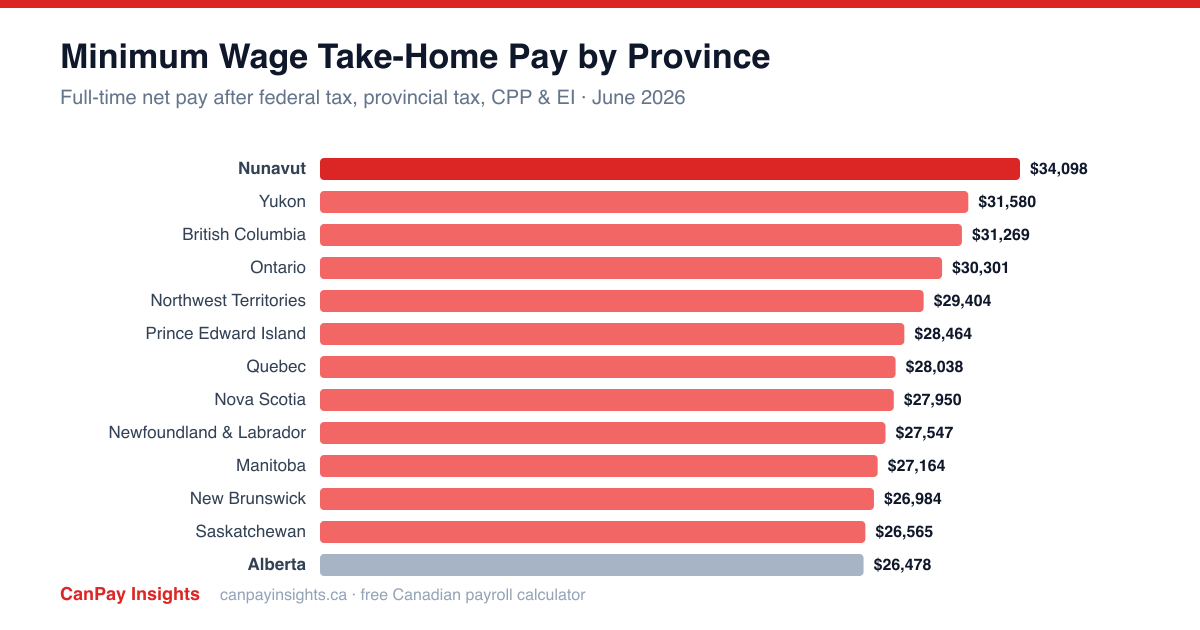
Minimum Wage Take-Home Pay in Every Canadian Province (2026 Data)
Nunavut minimum wage workers take home $35,265 a year while Alberta workers keep $26,989 — an $8,276 gap. Current 2026 data on what minimum wage is really worth after taxes in every province.
Ontario Overtime Rules 2026: Know Your Rights
Are you getting paid correctly for overtime? Ontario has specific rules about overtime thresholds, rates, and exemptions. Learn your rights as an employee.
Newcomer Tax Guide 2026: Your First Year in Canada
Just arrived in Canada? This comprehensive guide explains your tax obligations, available benefits, and how to maximize your first-year returns. Learn about the GST/HST credit, CCB, and more.
Salary insights
Salaire minimum au Québec 2026 : combien vous reste-t-il après impôt ?
Le salaire minimum au Québec est de 16,60 $ l'heure. À temps plein, cela donne environ 34 528 $ brut — mais après impôt, RRQ, RQAP et AE, il reste environ 28 400 $ par an. Voici le détail.
Salaire net au Québec 2026 : combien gagnez-vous vraiment ?
Un salaire de 50 000 $ au Québec laisse environ 38 824 $ net; 75 000 $ laisse environ 53 965 $. Voici le tableau complet du salaire net au Québec en 2026, de 40 000 $ à 100 000 $.
Minimum Wage Take-Home Pay in Every Canadian Province (2026 Data)
Nunavut minimum wage workers take home $35,265 a year while Alberta workers keep $26,989 — an $8,276 gap. Current 2026 data on what minimum wage is really worth after taxes in every province.
Provincial guides
Ontario Take-Home Pay Guide 2026: Real Wages, Real Deductions
The median full-time wage in Ontario is $34.62 an hour. Here is what that, and every other salary level, leaves after 2026 tax — with Statistics Canada wage data for every industry.
British Columbia Take-Home Pay Guide 2026: Real Wages, Real Deductions
The median full-time wage in British Columbia is $35.00 an hour. Here is what that, and every other salary level, leaves after 2026 tax — with Statistics Canada wage data for every industry.
Alberta Take-Home Pay Guide 2026: Real Wages, Real Deductions
The median full-time wage in Alberta is $34.97 an hour. Here is what that, and every other salary level, leaves after 2026 tax — with Statistics Canada wage data for every industry.
Quebec Take-Home Pay Guide 2026: Real Wages, Real Deductions
The median full-time wage in Quebec is $33.00 an hour. Here is what that, and every other salary level, leaves after 2026 tax — with Statistics Canada wage data for every industry.
Manitoba Take-Home Pay Guide 2026: Real Wages, Real Deductions
The median full-time wage in Manitoba is $28.74 an hour. Here is what that, and every other salary level, leaves after 2026 tax — with Statistics Canada wage data for every industry.
Saskatchewan Take-Home Pay Guide 2026: Real Wages, Real Deductions
The median full-time wage in Saskatchewan is $31.25 an hour. Here is what that, and every other salary level, leaves after 2026 tax — with Statistics Canada wage data for every industry.
Nova Scotia Take-Home Pay Guide 2026: Real Wages, Real Deductions
The median full-time wage in Nova Scotia is $29.80 an hour. Here is what that, and every other salary level, leaves after 2026 tax — with Statistics Canada wage data for every industry.
New Brunswick Take-Home Pay Guide 2026: Real Wages, Real Deductions
The median full-time wage in New Brunswick is $28.85 an hour. Here is what that, and every other salary level, leaves after 2026 tax — with Statistics Canada wage data for every industry.
Newfoundland and Labrador Take-Home Pay Guide 2026: Real Wages, Real Deductions
The median full-time wage in Newfoundland and Labrador is $30.07 an hour. Here is what that, and every other salary level, leaves after 2026 tax — with Statistics Canada wage data for every industry.
Prince Edward Island Take-Home Pay Guide 2026: Real Wages, Real Deductions
The median full-time wage in Prince Edward Island is $28.21 an hour. Here is what that, and every other salary level, leaves after 2026 tax — with Statistics Canada wage data for every industry.
Yukon Take-Home Pay Guide 2026: Real Wages, Real Deductions
What salaries in Yukon leave after federal and territorial tax, CPP and EI in 2026, and how the territory compares with the rest of Canada.
Northwest Territories Take-Home Pay Guide 2026: Real Wages, Real Deductions
What salaries in Northwest Territories leave after federal and territorial tax, CPP and EI in 2026, and how the territory compares with the rest of Canada.
Nunavut Take-Home Pay Guide 2026: Real Wages, Real Deductions
What salaries in Nunavut leave after federal and territorial tax, CPP and EI in 2026, and how the territory compares with the rest of Canada.
Money tips
Tax guides
TFSA vs RRSP in 2026: What $5,000 Saves You, Province by Province
Putting $5,000 into an RRSP in 2026 cuts income tax by $880 to $2,140 depending on salary and province. A TFSA saves nothing now but nothing is taxed later. The 2026 limits are $7,000 (TFSA) and $33,810 (RRSP).
Commission Tax in Canada 2026: How Much You Actually Take Home
Commission is taxed at the same rates as salary in Canada — it just gets withheld more on lump-sum cheques. An Ontario salesperson on a $50,000 base keeps about 67% of each commission dollar after tax. Real take-home by province, the bonus-method withholding explained, and the Line 22900 deductions only commission employees can claim.
CPP2 in 2026: The Second CPP Contribution Explained (With Real Numbers)
CPP2 is an extra 4% contribution on income above the first CPP ceiling. In 2025 that means up to about $396 more off your pay. Here is how CPP2 works in 2026, who pays it, and what it costs.
CPP Contributions 2026: Rates, Maximums, and What You Pay by Salary
CPP costs 5.95% between $3,500 and $74,600 — a maximum of $4,230.45 — plus 4% CPP2 up to $85,000, another $416. The most anyone pays in 2026 is $4,646.45, reached at a salary of $85,000.
How Much EI Will I Pay in 2026? (Premiums by Salary)
EI is 1.63% of insurable earnings in 2026, maxing out at about $1,123 once you earn around $68,900. On a $50,000 salary you pay about $815. Full EI premium table by salary, plus Quebec rates.
Baisse du taux fédéral à 14 % en 2026 : ce que ça change pour votre paie au Québec
En 2026, le taux du premier palier fédéral passe de 15 % à 14 %. Combinée à l'abattement québécois de 16,5 %, cette baisse réduit légèrement l'impôt de presque tous les travailleurs du Québec. Voici les chiffres.
Guide complet de la paie au Québec 2026 : RRQ, RQAP, AE et impôts
Au Québec, votre paie subit l'impôt fédéral, l'impôt du Québec, la RRQ, le RQAP et l'assurance-emploi. Ce guide 2026 explique chaque retenue, avec les taux à jour.
Ontario Overtime Rules 2026: Know Your Rights
Are you getting paid correctly for overtime? Ontario has specific rules about overtime thresholds, rates, and exemptions. Learn your rights as an employee.
Newcomer Tax Guide 2026: Your First Year in Canada
Just arrived in Canada? This comprehensive guide explains your tax obligations, available benefits, and how to maximize your first-year returns. Learn about the GST/HST credit, CCB, and more.
Want more precise calculations?
Use the CanPay Insights calculator for an analysis based on your own numbers.
Calculate my salaryTell Google to show you more of this
Google lets you name sources you want to see more of. Choose CanPay Insights and our pages carry a “preferred” mark in your Top Stories, AI Overviews and AI Mode.
It changes what you see and nothing else — not our position in anyone else's results. This is a personal preference, not a ranking signal.
Add CanPay Insights to your preferred sources