Quick Answer
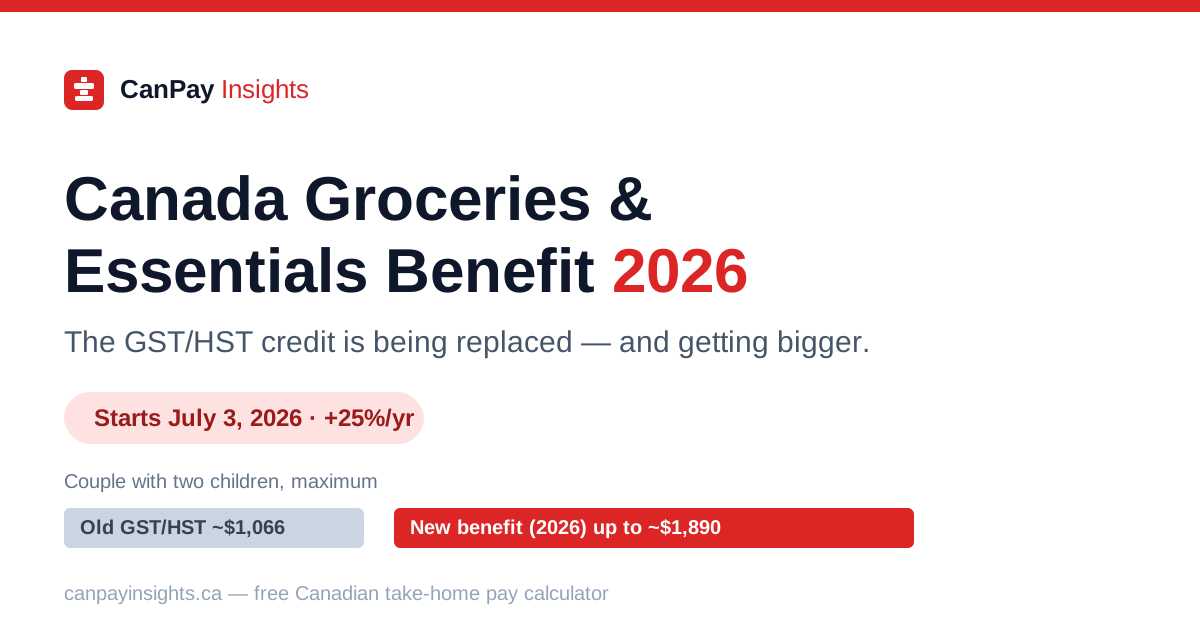
The Canada Groceries and Essentials Benefit (CGEB) replaces the GST/HST credit starting with the July 3, 2026 payment. It keeps the same eligibility and quarterly schedule, but maximum amounts are 25% higher, an increase that lasts five years (2026 to 2031) — so a couple with two children can receive up to $1,358 from July 2026 to June 2027, versus $1,066 under the old GST/HST credit. Most people get it automatically once they have filed their taxes, and there is also a one-time top-up landing by June 2026 equal to 50% of your 2025–26 GST/HST credit.
What is the Groceries and Essentials Benefit?
The Canada Groceries and Essentials Benefit (CGEB) is the federal government's new, larger version of the GST/HST credit. It starts with the July 3, 2026 quarterly payment and is meant to help offset the cost of groceries and everyday essentials.
The parts you already know stay the same: it is tax-free, paid quarterly, and you do not apply for it — the Canada Revenue Agency (CRA) works out your amount from your tax return. What changes is the size: maximum payments are 25% higher, an increase the CRA says will remain for five years, 2026 to 2031. It is one increase, not 25% more each year.
How much can you get?
Your amount depends on your income, marital status, and number of children, exactly like the old GST/HST credit. The CRA's maximums:
| Household | Old GST/HST credit, July 2025–June 2026 (max) | Groceries & Essentials Benefit, July 2026–June 2027 (max) |
|---|---|---|
| Single, no children | $533 | $679 |
| Couple, no children | $698 | $890 |
| Couple with two children | $1,066 | $1,358 |
That is a $292 increase for a couple with two children. Part of it is the 25% boost and part is the usual yearly inflation indexing.
Your own amount depends on your income and family size: lower-income households get the full amount, and it phases out as income rises, the same way the GST/HST credit always has.
The one-time top-up landing by June 2026
Ahead of the switch, the CRA is sending a one-time top-up no later than June 2026, equal to 50% of the annual value of your 2025–26 GST/HST credit. The CRA lists up to $267 for a single adult with no children and up to $533 for a couple with two children (up to $717 with four or more children) — a bonus on top of your regular payment. You don't need to do anything; if you qualified for the GST/HST credit, it arrives automatically.
2026 payment dates
| Date | Payment |
|---|---|
| April 2, 2026 | Final GST/HST credit (no increase) |
| July 3, 2026 | First Groceries & Essentials Benefit (increased) |
| October 5, 2026 | Groceries & Essentials Benefit |
Payments continue quarterly after that.
Do you need to apply?
No. For almost everyone the benefit is automatic once you have filed your income tax return — even if you had no income. New residents of Canada may need to submit a one-time form (RC151) to get started. The single most important thing you can do to keep receiving it is file your taxes on time every year.
What it means for your budget
The CGEB is money on top of your paycheque, not a payroll deduction — so it does not change your take-home pay, but it does change how far that pay goes. To see what you actually keep from work first, use the free take-home pay calculator for your province, then treat the benefit as a separate, tax-free top-up to your monthly budget. You can also check how much CPP and EI come off your pay.
Sources & disclaimer
Amounts and dates are from the CRA's own pages: how much you can get, the payment amounts table, benefit payment dates and the one-time top-up, checked September 22, 2026. An earlier version said the maximum would rise 25% every year; the CRA describes a single increase that lasts five years. Figures can change; your exact payment depends on your income and family situation. This is general information, not tax or financial advice — confirm current figures with the CRA.
Calculate Your Take-Home Pay
Enter your salary and province to see detailed tax breakdowns instantly.
Use Free CalculatorFrequently Asked Questions
When does the Canada Groceries and Essentials Benefit start?⌄
How much is the Groceries and Essentials Benefit?⌄
Do I need to apply for the Groceries and Essentials Benefit?⌄
Is the Groceries and Essentials Benefit taxable?⌄
What is the one-time top-up in June 2026?⌄
Does the benefit change my take-home pay?⌄
Share this article
Help others learn about Canadian taxes
Disclaimer: This content is based on publicly available information and general tax knowledge for reference only. Individual tax situations may vary. Please consult a qualified tax professional or accountant for personalized advice.