Quick Answer
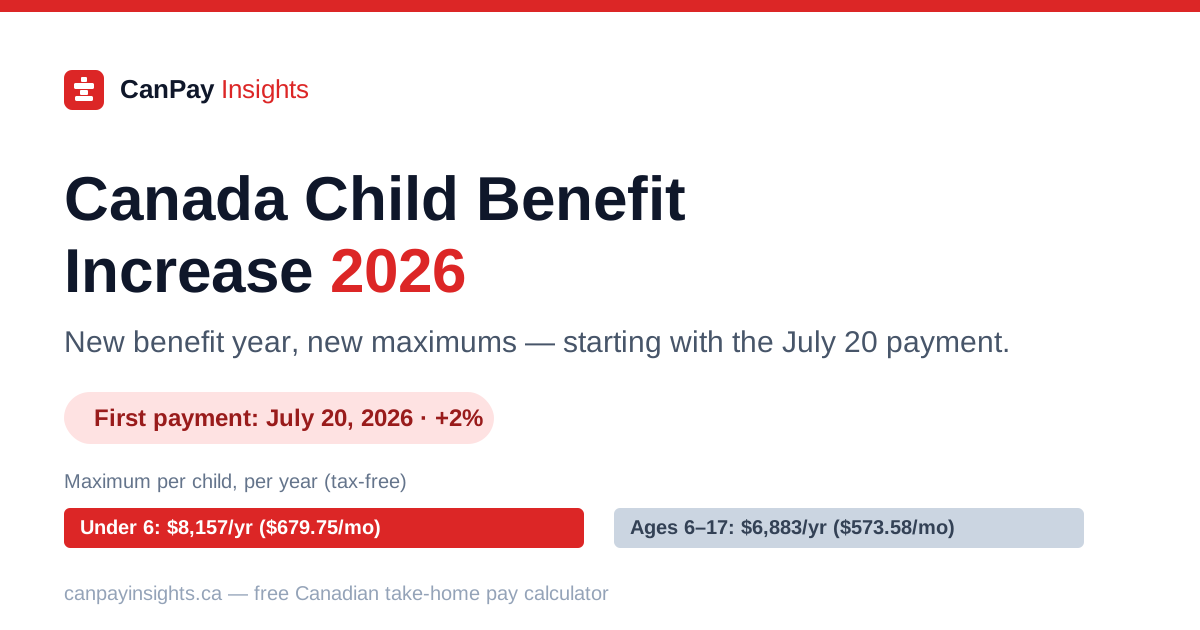
For the new benefit year starting July 2026, the Canada Child Benefit rises 2%: up to $8,157 per year ($679.75 per month) for each child under 6, and up to $6,883 per year ($573.58 per month) for each child aged 6 to 17. Families with adjusted family net income under $38,237 (from the 2025 tax return) get the full amount; it phases down above that. The first payment at the new rates lands July 20, 2026, and the money is tax-free and automatic once you have filed your taxes.
The new CCB benefit year starts this month
Every July, the Canada Child Benefit (CCB) resets for a new benefit year, indexed to inflation. For July 2026 to June 2027 the indexation is 2%, and the first payment at the new rates arrives on July 20, 2026.
The new maximum amounts
| Child | 2025–26 max | 2026–27 max | Increase |
|---|---|---|---|
| Under 6 | $7,997/yr | $8,157/yr ($679.75/mo) | +$160/yr |
| Aged 6–17 | $6,748/yr | $6,883/yr ($573.58/mo) | +$135/yr |
For a family with two children under 6, the maximum is now about $16,314 a year, tax-free — roughly $1,360 a month.
Who gets the full amount?
Your CCB is based on your adjusted family net income (AFNI) from your 2025 tax return:
- AFNI under $38,237 → you get the maximum for each child.
- Above that, the benefit phases down gradually as income rises — many middle-income families still receive a substantial monthly amount.
Because the CCB is income-tested, your net family income is the number that matters. If you are negotiating a raise or comparing job offers, it helps to know both your take-home pay and how a higher gross income interacts with income-tested benefits like the CCB.
Key facts
- Tax-free: the CCB never appears as taxable income.
- Automatic: no application needed for the increase — but both spouses must file a tax return every year, even with zero income, or payments stop.
- Monthly: paid around the 20th of each month; the July 20, 2026 deposit is the first at the new rates.
What it means for your family budget
The CCB is paid on top of your employment income — it does not change your paycheque. To plan your monthly budget, start with your real after-tax pay from the free take-home pay calculator, then add your CCB. Families juggling work schedules can also estimate hourly pay with the hourly wage calculator.
Sources & disclaimer
Based on CRA indexation figures for the 2026–27 benefit year as reported in July 2026. Your exact amount depends on your family income, number and ages of children, and custody arrangements. This is general information, not tax or financial advice — confirm your amounts in CRA My Account or with the CRA.
Calculate Your Take-Home Pay
Enter your salary and province to see detailed tax breakdowns instantly.
Use Free CalculatorFrequently Asked Questions
How much is the Canada Child Benefit in 2026?⌄
When do the higher CCB payments start?⌄
What income do I need to get the full CCB?⌄
Is the Canada Child Benefit taxable?⌄
Do I need to apply for the increase?⌄
How much more money is the 2026 CCB increase worth?⌄
Share this article
Help others learn about Canadian taxes
Disclaimer: This content is based on publicly available information and general tax knowledge for reference only. Individual tax situations may vary. Please consult a qualified tax professional or accountant for personalized advice.