Quick Answer
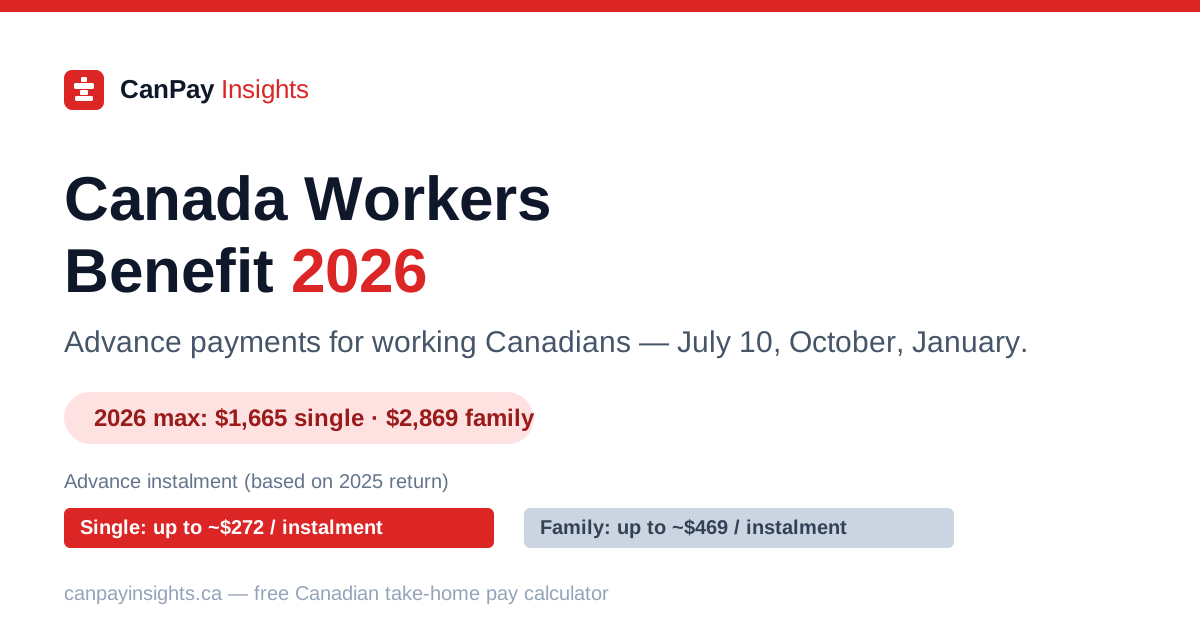
The Canada Workers Benefit (CWB) is a refundable tax credit for low- and modest-income workers. Advance payments (ACWB) for the 2026–27 cycle are paid in three instalments — July 10, 2026, October 2026, and January 2027 — worth up to about $272 per instalment for a single worker and about $469 for a family, based on your 2025 tax return. For the 2026 tax year itself, the maximum basic CWB rises to $1,665 for singles and $2,869 for families, plus a disability supplement of up to $860. It is automatic: if you qualified on your 2025 return, the CRA pays you without any application.
What happened on July 10
The CRA paid the first Advanced Canada Workers Benefit (ACWB) instalment of the 2026–27 cycle on July 10, 2026 — up to about $272 for a single worker and $469 for a family. If you qualified for the CWB on your 2025 tax return (line 45300), the money arrived automatically.
What is the Canada Workers Benefit?
The CWB is a refundable tax credit for people who work but earn a low or modest income. Refundable means you get the money even if you owe no tax. There are two parts:
- a basic amount, and
- a disability supplement (up to $860 for 2026) if you qualify for the disability tax credit.
The numbers for 2026
| Single worker | Family | |
|---|---|---|
| Max basic CWB, 2026 tax year | $1,665 | $2,869 |
| Advance instalment (Jul/Oct/Jan) | up to ~$272 | up to ~$469 |
Advance payments equal 50% of your entitlement from your 2025 return, split into three instalments — July 10, 2026, October 2026, and January 2027. The rest arrives after you file your 2026 return next spring.
Who qualifies?
- You have working income (employment or self-employment) and your net income is below your province's threshold (the cut-offs differ by province and family type);
- You are 19 or older on December 31, or live with a spouse/common-law partner or your child;
- Full-time students (13+ weeks) without dependants generally do not qualify.
Will earning more cost me my CWB?
The CWB grows with your working income at first, then phases out as net income rises. A raise can shrink the credit, but you almost always come out ahead in total. To see the real effect of more hours or a higher wage on your pocket, run your numbers in the hourly wage calculator or the take-home pay calculator — and if you earn minimum wage, see the province-by-province minimum-wage take-home study.
Key dates
| Date | What |
|---|---|
| July 10, 2026 | First 2026–27 ACWB instalment (paid) |
| October 2026 | Second instalment |
| January 2027 | Third instalment |
| Spring 2027 | Balance settled when you file your 2026 return |
Sources & disclaimer
Based on CRA figures for the 2026–27 ACWB cycle and 2026 tax-year indexation as reported in July 2026. Exact amounts depend on your income, province, and family situation. This is general information, not tax or financial advice — confirm your amounts in CRA My Account or with the CRA.
Calculate Your Take-Home Pay
Enter your salary and province to see detailed tax breakdowns instantly.
Use Free CalculatorFrequently Asked Questions
What is the Canada Workers Benefit?⌄
When are the ACWB payment dates in 2026?⌄
How much is the ACWB advance payment?⌄
How much is the CWB for 2026?⌄
Do I need to apply for the Canada Workers Benefit?⌄
Does working more hours reduce my CWB?⌄
Share this article
Help others learn about Canadian taxes
Disclaimer: This content is based on publicly available information and general tax knowledge for reference only. Individual tax situations may vary. Please consult a qualified tax professional or accountant for personalized advice.