Quick Answer
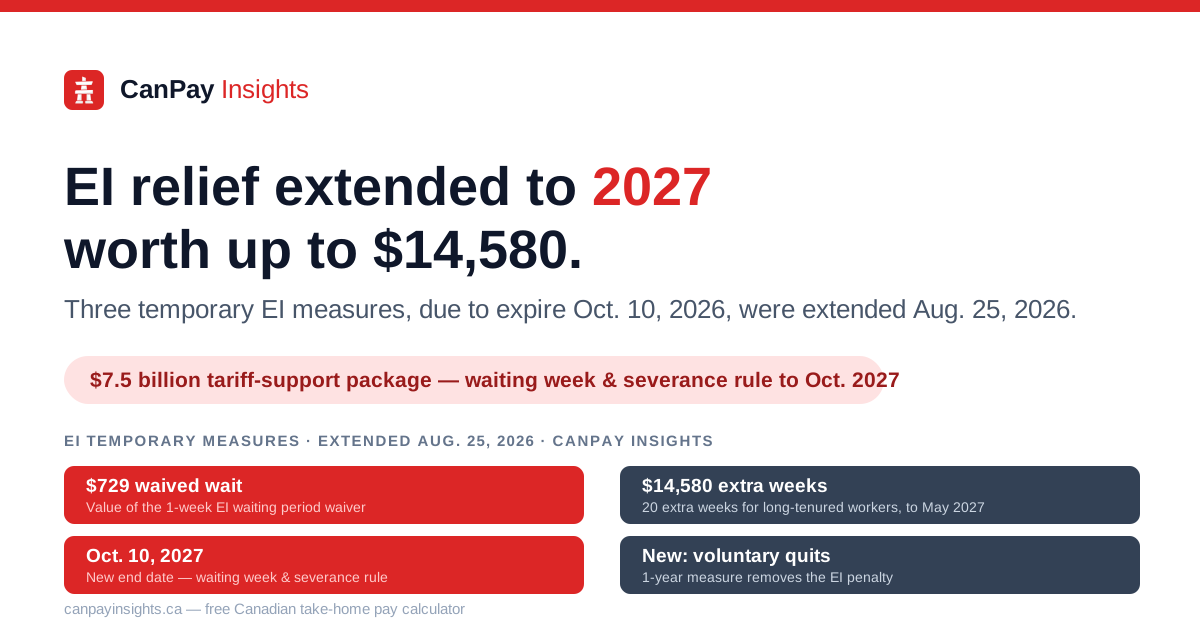
On August 25, 2026, the federal government extended three temporary EI relief measures that were due to expire October 10, 2026, as part of a $7.5 billion tariff-support package. The one-week EI waiting-period waiver and the rule that stops severance and vacation pay from delaying benefits are both extended by one year, to claims that start by October 9, 2027. The extra 20 weeks of regular benefits for long-tenured workers (raising the maximum from 45 to 65 weeks) is extended by eight months, to claims that start by June 12, 2027. A new, separate measure also removes the EI penalty, for claims starting October 11, 2026 to October 9, 2027, for workers who voluntarily left a job, as long as their most recent job loss was through no fault of their own. The waived waiting week alone is worth up to $729 — the 2026 maximum weekly EI benefit — and the extra 20 weeks can be worth up to $14,580 to a long-tenured worker at the earnings ceiling.
The EI relief measures were not allowed to lapse — they were extended into 2027
Three temporary EI measures, introduced in 2025 to cushion the impact of U.S. tariffs on Canadian workers, were scheduled to expire on October 10, 2026. That deadline was in enough headlines that it is still easy to find articles saying the measures end this month.
They are not. On August 25, 2026, the federal government extended all three measures, and added a fourth, as part of a $7.5 billion support package for workers and businesses responding to the Canada–U.S. tariff dispute (announced alongside Canadian counter-tariffs on $27.6 billion of U.S. goods).
What actually changed on August 25, 2026
| Measure | Original end date | New end date | Extension |
|---|---|---|---|
| One-week EI waiting period waived | October 10, 2026 | Claims starting by October 9, 2027 | +1 year |
| Severance/vacation pay no longer delays EI | October 10, 2026 | Claims starting by October 9, 2027 | +1 year |
| Extra 20 weeks for long-tenured workers (45 → 65 weeks max) | October 10, 2026 | Claims starting by June 12, 2027 | +8 months |
| Voluntary-leave penalty removed (new) | — | Claims starting October 11, 2026 to October 9, 2027 | new measure |
What the waived waiting week is actually worth
Normally, every EI claimant serves one unpaid week before payments start. Waiving it is worth exactly one week of your EI benefit — 55% of your average insurable earnings, capped at the 2026 maximum insurable earnings of $68,900:
| Annual salary | Weekly EI benefit (55%, capped) | Value of the waived waiting week | Value of 20 extra weeks (long-tenured) |
|---|---|---|---|
| $40,000 | $423 | $423 | $8,460 |
| $50,000 | $529 | $529 | $10,580 |
| $60,000 | $635 | $635 | $12,700 |
| $68,900+ (2026 ceiling) | $729 (max) | $729 | $14,580 |
The extra 20 weeks only apply to "long-tenured workers" — those with fewer than 36 weeks of regular or fishing benefits in the previous three years, who paid at least 30% of the maximum annual EI premium in at least 7 of the previous 10 years. For someone who qualifies and is laid off near the earnings ceiling, that extension alone is worth more than $14,000.
Severance no longer starts the clock
Under the normal rules, a severance package, pay in lieu of notice, or an accumulated vacation payout is treated as earnings and allocated against your claim starting from your last day of work — which can push your first EI payment back by weeks or months, depending on the size of the payout. The extended measure, now covering claims that start by October 9, 2027, stops that allocation entirely for qualifying claims, so benefits can start as soon as the (also-waived) waiting period clears, regardless of any lump sum from your employer.
New: quitting one job no longer disqualifies you from EI at the next one
The fourth measure, introduced fresh on August 25, 2026, is not an extension — it is new. For claims starting October 11, 2026 to October 9, 2027, workers who voluntarily left a job are no longer penalized when applying for EI, as long as their most recent job loss was through no fault of their own. In plain terms: quit Job 1, take Job 2, get laid off from Job 2 — the voluntary departure from Job 1 no longer blocks your EI claim.
What this doesn't change
None of this affects regular payroll deductions or your take-home pay while you're working — EI premiums are unchanged by this announcement. It only affects what you'd receive, and when, if you make an EI claim. For how much EI is deducted from your paycheque today, see how much EI you pay in 2026 and the confirmed 2027 EI premium rate, or check your full deduction breakdown with the CPP/EI calculator.
Sources & disclaimer
The $7.5 billion support package and the extension of the three temporary EI measures were confirmed in the Department of Finance Canada news release of August 25, 2026, Canada announces targeted countermeasures and substantive support for workers and businesses in response to U.S. tariffs, cross-checked against the Government of Canada's temporary EI measures page (updated October 6, 2026), which gives the new claim-start dates. The original October 10, 2026 end dates come from the March 2026 ESDC release; the June 15, 2025 start date, the long-tenured-worker qualifying criteria, and the 2026 maximum insurable earnings ($68,900) and maximum weekly benefit ($729) are from the Government of Canada's temporary EI measures and EI regular benefits pages. Dollar values for the waived waiting week and extra weeks are CanPay Insights' own calculations (55% of insurable earnings, capped at $68,900, rounded to the nearest dollar) and assume a single claimant with no other insurable income. This is general information, not legal or financial advice — confirm your own situation with Service Canada.
Calculate Your Take-Home Pay
Enter your salary and province to see detailed tax breakdowns instantly.
Use Free CalculatorFrequently Asked Questions
Did the EI tariff relief measures expire on October 10, 2026?⌄
How much is the waived one-week EI waiting period worth?⌄
What are the extra 20 weeks for long-tenured workers worth?⌄
How does severance pay normally affect EI, and what changed?⌄
What is the new rule for workers who quit a job?⌄
Do these measures apply in Quebec?⌄
Share this article
Help others learn about Canadian taxes
Disclaimer: This content is based on publicly available information and general tax knowledge for reference only. Individual tax situations may vary. Please consult a qualified tax professional or accountant for personalized advice.