Quick Answer
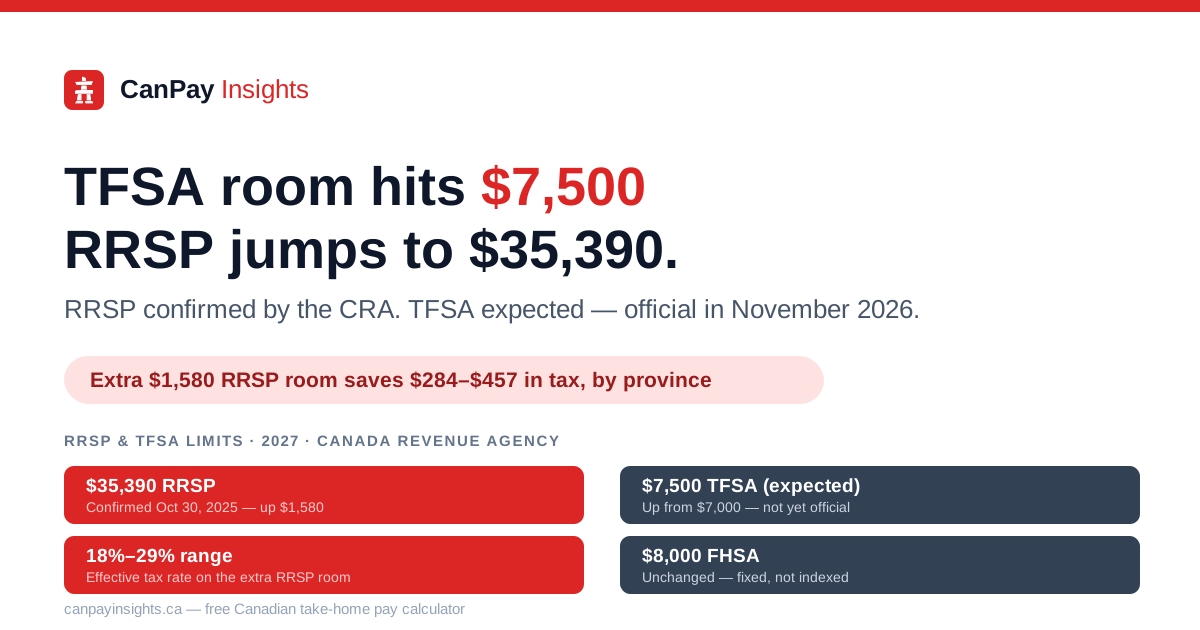
An RRSP lowers your tax now and taxes the money when you withdraw it; a TFSA gives no deduction now and never taxes the money. In 2026 a $5,000 RRSP contribution saves about $1,423 in Ontario at an $80,000 salary but about $880 at $45,000, so the RRSP pays off most for higher earners who expect a lower income in retirement. The 2026 limits are $7,000 for a TFSA and $33,810 for an RRSP.
The short answer
An RRSP gives you a tax deduction now and taxes the money when it comes out. A TFSA gives no deduction now and never taxes the money. So the question is when your tax rate is higher: today, or the year you withdraw.
The 2026 limits are $7,000 for a TFSA and $33,810 for an RRSP (or 18% of your 2025 earned income, whichever is lower, plus any unused room).
What $5,000 in an RRSP saves you in 2026
Income tax saved by a $5,000 RRSP contribution, single worker, no other income or credits:
| Salary | Ontario | British Columbia | Alberta | Quebec |
|---|---|---|---|---|
| $45,000 | $880 | $1,082 | $1,017 | $1,231 |
| $60,000 | $1,143 | $1,069 | $1,076 | $1,462 |
| $80,000 | $1,423 | $1,354 | $1,464 | $1,731 |
| $120,000 | $1,995 | $1,708 | $1,626 | $2,140 |
Put the same $5,000 in a TFSA and the saving today is $0. The difference shows up later: everything that comes out of the TFSA is tax-free, while every dollar out of the RRSP is taxed at whatever your rate is then.
When each one wins
- RRSP first if you earn more now than you expect to in retirement. At $120,000 in Ontario, $5,000 in an RRSP saves almost $2,000 this year.
- TFSA first if your income is modest now, if you might need the money before retirement, or if you expect income-tested benefits later: TFSA withdrawals don't count as income for the Guaranteed Income Supplement or Old Age Security; RRSP withdrawals do.
- Both if you can: many people take the RRSP refund and put it into the TFSA.
Flexibility
TFSA money can come out at any time, and the amount withdrawn is added back to your room on January 1 of the next year. RRSP withdrawals before retirement are taxed and the room is lost for good, except through the Home Buyers' Plan and the Lifelong Learning Plan.
How we calculated
The tax savings above are CanPay Insights' own calculations: the 2026 federal and provincial income tax on the salary, minus the tax on the salary less $5,000, using the same tax engine that is checked against the CRA's payroll deduction tables before every release. Ontario includes the Ontario Health Premium, which an RRSP deduction also lowers. Your real saving depends on your other income and credits, and arrives as a smaller withholding or a refund when you file. The 2026 limits are from the Canada Revenue Agency's registered plans "What's new" page. This is general information, not financial advice. To see your own take-home pay with an RRSP contribution, use the calculator.
Calculate Your Take-Home Pay
Enter your salary and province to see detailed tax breakdowns instantly.
Use Free CalculatorWhere Canadians actually hold TFSAs and RRSPs
If you're opening one of these accounts, Wealthsimple is a low-fee option many Canadians use for self-directed and automated investing.
See WealthsimplePaid referral link — we may earn a bonus if you sign up, at no extra cost to you. Learn more.
Frequently Asked Questions
What are the TFSA and RRSP limits for 2026?⌄
How much tax does a $5,000 RRSP contribution save in 2026?⌄
Should I choose a TFSA or an RRSP?⌄
Share this article
Help others learn about Canadian taxes
Disclaimer: This content is based on publicly available information and general tax knowledge for reference only. Individual tax situations may vary. Please consult a qualified tax professional or accountant for personalized advice.