Quick Answer
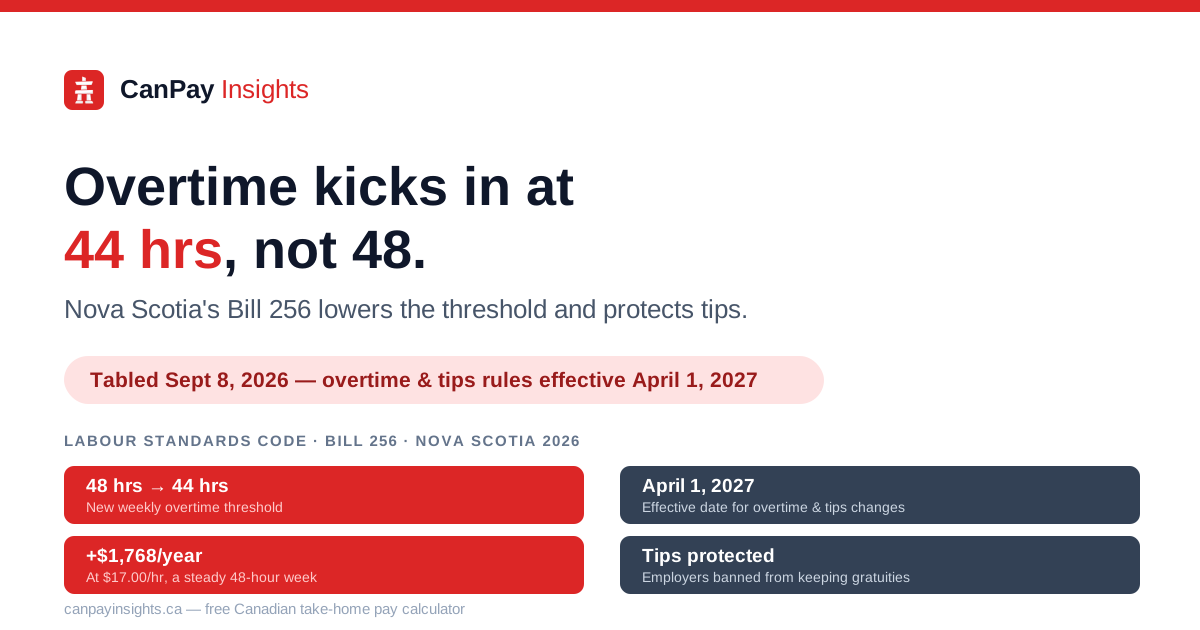
Nova Scotia's Bill 256, tabled September 8, 2026, lowers the weekly overtime threshold from 48 hours to 44 hours, extends overtime eligibility to extra hours worked voluntarily (not just when required by an employer), and bans employers from keeping workers' tips and gratuities. The overtime and tips provisions take effect April 1, 2027; wage-recovery measures follow once regulations are developed. Construction and agriculture workers are excluded. For a worker earning Nova Scotia's $17.00 minimum wage (effective October 1, 2026) who regularly works 48 hours a week, the change is worth about $34 more a week, or roughly $1,768 more a year, once hours 45 through 48 switch from straight time to time-and-a-half.
Overtime kicks in four hours sooner, starting in 2027
Nova Scotia has tabled Bill 256, a package of amendments to the province's Labour Standards Code, introduced in the Legislature on September 8, 2026. The headline change for anyone paid by the hour: the weekly overtime threshold drops from 48 hours to 44 hours. Two more changes travel with it — overtime pay for extra hours worked voluntarily, not just when an employer requires them, and a first-time legal ban on employers keeping any part of workers' tips and gratuities.
"At a time when affordability matters more than ever, this legislation is about putting more money in workers' pockets," Nova Scotia's Minister of Labour, Skills and Immigration, Nolan Young, said when the bill was tabled.
What changes, and when
| Change | Detail | Effective date |
|---|---|---|
| Overtime threshold | Falls from 48 hours/week to 44 hours/week | April 1, 2027 |
| Overtime eligibility | Extends to extra hours worked voluntarily and permitted by the employer, not only hours the employer required | April 1, 2027 |
| Tips and gratuities | Employers banned from keeping any part of a worker's tips | April 1, 2027 |
| Wage recovery | New tools to help recover unpaid wages owed by employers | To be set, after stakeholder consultation and regulations |
| Excluded sectors | Construction and agriculture workers are not covered by the new overtime and tips provisions | — |
The bill cleared the Legislature's Public Bills Committee on September 14, 2026; as of September 27 we had found no record of royal assent, so it is proposed legislation, not yet law, though the government has committed to the April 1, 2027 effective date for the overtime and tips changes.
What four extra overtime hours are actually worth
Nova Scotia's overtime rate for most employees is 1.5 times the regular wage once the weekly threshold is crossed. Dropping the threshold from 48 to 44 hours means a worker who regularly works a 48-hour week gets 4 hours a week reclassified from straight time to time-and-a-half — real money, not a rate change.
Using Nova Scotia's minimum wage of $17.00/hour (effective October 1, 2026) as an example, for someone working a steady 48-hour week:
| Today (OT after 48 hrs) | Starting April 2027 (OT after 44 hrs) | |
|---|---|---|
| Regular hours | 48 x $17.00 = $816.00 | 44 x $17.00 = $748.00 |
| Overtime hours | — | 4 x $25.50 (1.5x) = $102.00 |
| Weekly total | $816.00 | $850.00 |
| Extra per week | — | +$34.00 |
| Extra per year (52 weeks) | — | +$1,768 |
That gain scales directly with wage — it works out to roughly 2 times the hourly wage in extra weekly pay, for anyone regularly working a 48-hour week once the threshold falls:
| Hourly wage | Extra per 48-hour week | Extra per year (52 weeks) |
|---|---|---|
| $17.00 (NS minimum wage, Oct. 2026) | +$34.00 | +$1,768 |
| $20.00 | +$40.00 | +$2,080 |
| $22.00 | +$44.00 | +$2,288 |
| $25.00 | +$50.00 | +$2,600 |
| $30.00 | +$60.00 | +$3,120 |
Figures assume the employee's regular hourly wage (not the special minimum-wage-based overtime rate that applies to managers and a few other categories) and a consistent 48-hour work week; actual pay varies with hours worked, wage, and role. These are gross figures before payroll deductions — see the Nova Scotia paycheck calculator for what any given paycheque nets after tax, CPP, and EI.
The other two changes, in plain terms
Voluntary overtime now counts. Under the current Code, some employees only earn overtime when an employer requires the extra hours — an employee who stays late by choice, with the employer's permission, might not have a clear right to time-and-a-half. Bill 256 closes that gap: permitted voluntary hours would qualify for overtime pay the same as required ones.
Tips belong to the worker who earned them. Nova Scotia's Labour Standards Code has not, until now, said anything specific about tips. Bill 256 would make it illegal for an employer to keep any part of a tip or gratuity intended for staff — a protection several other provinces, including Ontario, already have in some form.
Not everyone is covered. The province has said the new overtime and tips provisions will not extend to workers in the construction and agriculture sectors, which have long had separate overtime rules under the Code.
Why this is a 2027 story worth knowing about now
Because the effective date is more than a year out, it's easy to file this under "not yet relevant." But the threshold and rate a worker will be paid under starting April 1, 2027 is locked in as proposed legislation today, which matters for anyone comparing a Nova Scotia job offer, negotiating scheduled hours, or budgeting around regularly working past 44 hours a week. If you want to see what any wage — minimum, current, or a raise you're negotiating — actually nets after Nova Scotia's federal and provincial deductions, CPP, and EI, run it through the Nova Scotia paycheck calculator or the free salary calculator. For how Nova Scotia's take-home pay compares with the rest of the country, see minimum wage take-home pay by province and compare provinces.
Sources & disclaimer
Bill 256's provisions — the 44-hour overtime threshold, voluntary-overtime eligibility, the tips and gratuities ban, wage-recovery tools, the April 1, 2027 effective date, and the construction/agriculture exclusion — are taken from the Government of Nova Scotia's official news release of September 8, 2026, and corroborated by CBC News and Canadian HR Reporter coverage of the same bill. Nova Scotia's current overtime rule (1.5x the regular wage after 48 hours/week) is from the province's own overtime pay guidance. The $17.00 minimum wage is Nova Scotia's rate effective October 1, 2026, as previously reported by CanPay Insights. Dollar comparisons are CanPay Insights' own arithmetic based on those published rates; they are gross wages before income tax, CPP, and EI, and assume a consistent 48-hour work week — real pay varies by hours actually worked, employer, and role. Bill 256 had not received royal assent as of publication and remains subject to change as it moves through the Legislature. This is general information, not legal or tax advice; confirm current status at the Nova Scotia Legislature.
Calculate Your Take-Home Pay
Enter your salary and province to see detailed tax breakdowns instantly.
Use Free CalculatorFrequently Asked Questions
What is Nova Scotia's Bill 256?⌄
When do Nova Scotia's new overtime rules take effect?⌄
How much more will a Nova Scotia worker earn under the new 44-hour threshold?⌄
Does the new rule cover overtime hours an employee chooses to work?⌄
What does Nova Scotia's new tips law do?⌄
Who is excluded from the new overtime and tips protections?⌄
Share this article
Help others learn about Canadian taxes
Disclaimer: This content is based on publicly available information and general tax knowledge for reference only. Individual tax situations may vary. Please consult a qualified tax professional or accountant for personalized advice.