Quick Answer
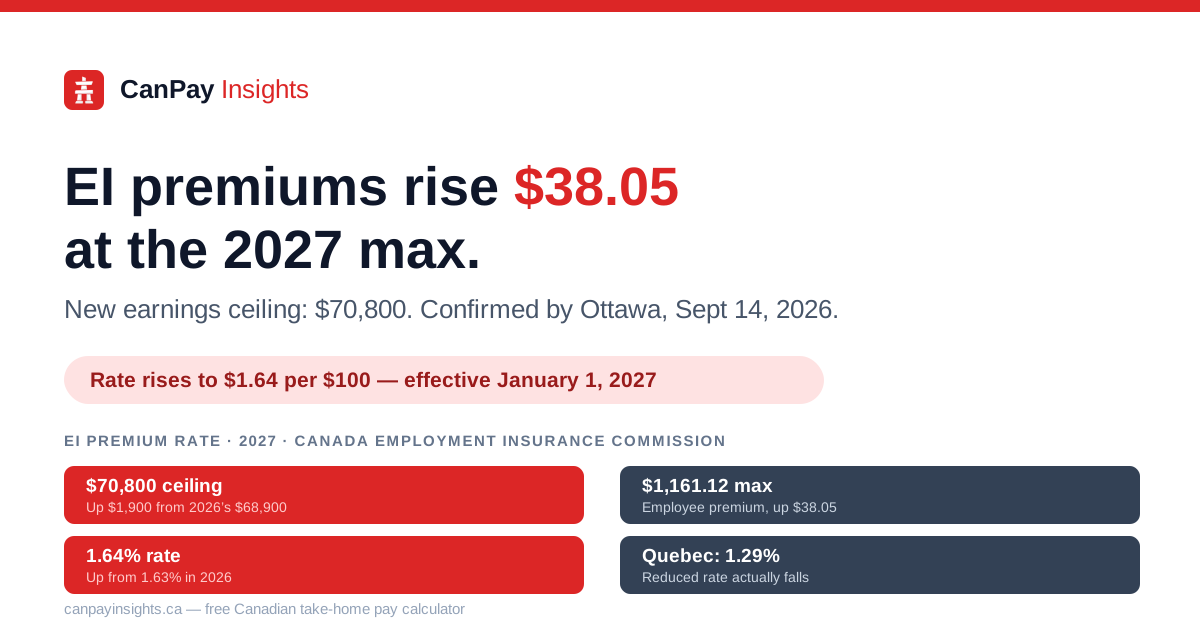
The Canada Employment Insurance Commission confirmed on September 14, 2026 that the 2027 EI premium rate rises to $1.64 per $100 of insurable earnings (up from $1.63 in 2026), while the maximum insurable earnings climbs to $70,800 from $68,900. Together, those two changes push the maximum annual employee EI premium up $38.05, to $1,161.12, and the maximum employer premium up $53.27, to $1,625.57 per employee — both effective January 1, 2027. Workers earning under the 2026 ceiling see a much smaller increase of $4 to $7 a year; Quebec's reduced EI rate actually ticks down slightly, to 1.29%, though its own maximum still rises because of the higher earnings ceiling.
Confirmed: EI premiums rise again in 2027, mostly because the ceiling moved
The Canada Employment Insurance Commission (CEIC) confirmed the 2027 EI premium rate on September 14, 2026. In 2027, the employee rate rises to 1.64% of insurable earnings and the maximum insurable earnings (MIE) climbs to $70,800, both effective January 1, 2027. That's a small rate increase but a $1,900 jump in the ceiling from 2026's $68,900 and 1.63%. Combined, those two changes push the maximum annual employee EI premium up $38.05 in 2027, from $1,123.07 to $1,161.12.
We ran the confirmed 2027 numbers through the same math the CanPay Insights tax engine uses for EI, to see exactly what it costs at different salaries — and why the story is different if you're in Quebec.
What's changing
| 2026 (current) | 2027 (confirmed) | Change | |
|---|---|---|---|
| Employee EI rate | 1.63% | 1.64% (2027) | +0.01 pp |
| Employer EI rate | 2.28% | 2.30% (2027) | +0.02 pp |
| Maximum insurable earnings | $68,900 | $70,800 (2027) | +$1,900 |
| Maximum employee premium | $1,123.07 | $1,161.12 (2027) | +$38.05 |
| Maximum employer premium (per employee) | $1,572.30 | $1,625.57 (2027) | +$53.27 |
The 2027 rate isn't a new high — it matches what Canadians paid in 2025. 2026 was actually a one-year dip, down to 1.63% from 1.64%, before the rate returned to 1.64% for 2027.
What it costs by salary
Because EI is a flat rate up to the ceiling, most of the 2027 increase is small unless you earn near or above the old $68,900 ceiling:
| Annual salary | 2026 EI premium | 2027 EI premium | Change |
|---|---|---|---|
| $40,000 | $652.00 | $656.00 | +$4.00 |
| $50,000 | $815.00 | $820.00 | +$5.00 |
| $60,000 | $978.00 | $984.00 | +$6.00 |
| $68,900 (2026 ceiling) | $1,123.07 (max) | $1,129.96 | +$6.89 |
| $70,800+ (2027 ceiling) | $1,123.07 (max) | $1,161.12 (max) | +$38.05 |
Figures are the employee share only, calculated as insurable earnings × the 2026 or 2027 rate, capped at that year's maximum insurable earnings.
The pattern is the same one we saw with the 2027 CPP rate cut, just in reverse: the people who feel the full change are the ones earning at or above the ceiling, not the median earner.
Quebec: the rate falls, but the ceiling still costs more
Quebec runs its own parental insurance plan (QPIP), so Quebec workers pay a separately calculated, reduced federal EI rate. For 2027, that reduced rate actually falls, from 1.30% to 1.29% — a rare EI decrease. But because the same $70,800 ceiling applies in Quebec too in 2027, the maximum a Quebec worker can pay still rises:
| Annual salary | 2026 EI (Quebec) | 2027 EI (Quebec) | Change |
|---|---|---|---|
| $40,000 | $520.00 | $516.00 | −$4.00 |
| $50,000 | $650.00 | $645.00 | −$5.00 |
| $60,000 | $780.00 | $774.00 | −$6.00 |
| $68,900 | $895.70 (max) | $888.81 | −$6.89 |
| $70,800+ (2027 ceiling) | $895.70 (max) | $913.32 (max) | +$17.62 |
So a Quebec worker earning under $68,900 actually pays a few dollars less EI in 2027 — but a Quebec worker at or above the new ceiling still pays $17.62 more, less than half the $38.05 increase everyone else sees at the ceiling.
Why EI moves independently of CPP
If you followed our earlier coverage of the 2027 CPP rate cut, it's worth being clear these are two unrelated decisions. The base CPP rate is falling from 9.9% to 9.5% in 2027 because Bill C-30, a federal budget bill, legislated the cut. The EI rate isn't legislated year to year the same way — the Employment Insurance Act requires the CEIC to set a rate each September that keeps the EI Operating Account roughly break-even over a seven-year horizon, based on projected claims and forecast insurable earnings. That mechanism pushed the rate down slightly for 2026 and back up for 2027; it has nothing to do with the CPP fund, which is managed separately by the CPP Investment Board.
The federal government also points out that its EI Premium Reduction Program, which lowers premiums for employers offering a qualifying short-term disability plan, is expected to return about $1.7 billion to registered employers and employees in 2027.
None of this shows up until your first 2027 paycheque
Nothing changes on your paycheque for the rest of 2026 — the new rate and ceiling take effect January 1, 2027. For your exact current EI premium, see how much EI you pay by salary, or use the CPP & EI calculator to see your full 2026 deduction breakdown. Quebec workers can see the QPIP side of the calculation with the Quebec paycheck calculator.
Sources & disclaimer
The 2027 EI premium rate, maximum insurable earnings, and maximum contribution figures are taken directly from the Government of Canada's official announcement, Canada Employment Insurance Commission confirms 2027 Employment Insurance premium rate (Employment and Social Development Canada, September 14, 2026), cross-checked against contemporaneous reporting from Insurance Business Canada. The 2026 comparison figures (rate, ceiling, and maximums) match the constants used in the CanPay Insights tax engine. Salary-by-salary premium figures are CanPay Insights' own calculations — insurable earnings multiplied by each year's confirmed rate, capped at that year's maximum insurable earnings — and assume a single employee with no other insurable income. This is general information, not tax or financial advice; confirm your own EI deductions with the Canada Revenue Agency.
Calculate Your Take-Home Pay
Enter your salary and province to see detailed tax breakdowns instantly.
Use Free CalculatorFrequently Asked Questions
What is the EI premium rate for 2027?⌄
How much extra EI will I pay in 2027?⌄
What is the maximum insurable earnings for 2027?⌄
Why is EI going up when the CPP rate is being cut in 2027?⌄
Does the EI change affect Quebec workers the same way?⌄
How much more will employers pay in EI premiums for 2027?⌄
Share this article
Help others learn about Canadian taxes
Disclaimer: This content is based on publicly available information and general tax knowledge for reference only. Individual tax situations may vary. Please consult a qualified tax professional or accountant for personalized advice.