Quick Answer
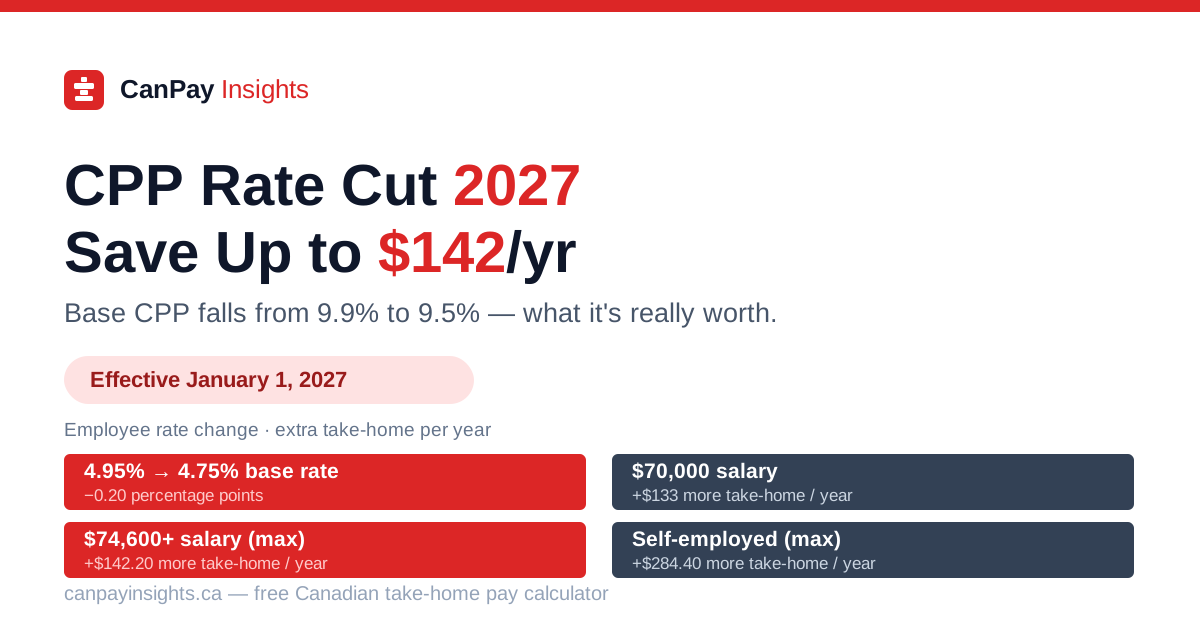
Starting January 1, 2027, the base CPP contribution rate falls from 9.9% to 9.5% combined, with the employee share dropping from 4.95% to 4.75% and employers matching. The cut was legislated by Bill C-30, which received Royal Assent in June 2026. For an employee earning $70,000, the 2027 rate cut is worth about $133 more take-home pay a year, and anyone earning $74,600 or more saves the 2027 maximum of about $142.20. Self-employed workers, who pay both the employee and employer share, save roughly double. The CPP2 rate of 4% on income above the first ceiling is unchanged.
Your CPP deduction is about to get smaller
For the first time since the CPP enhancement began phasing in back in 2019, a piece of your CPP contribution is coming back off your paycheque instead of going up. Starting January 1, 2027, the base CPP contribution rate falls from 9.9% to 9.5% combined (employer + employee) — a 0.40 percentage point cut. For an individual employee, that is a drop from 4.95% to 4.75%.
It is now law: the change was announced in Ottawa's Spring Economic Update on April 28, 2026, and became law when Bill C-30 (the Spring Economic Update 2026 Implementation Act) received Royal Assent on June 18, 2026. All provincial finance ministers signed off, which CPP rate changes require.
We ran the new rate through the CanPay Insights tax engine to see exactly what it is worth, salary by salary.
What's changing
| 2026 (current) | 2027 (after the cut) | Change | |
|---|---|---|---|
| Base CPP rate, employee | 4.95% | 4.75% | −0.20 pp |
| Enhanced ("first additional") CPP, employee | 1.00% | 1.00% (unchanged) | — |
| Total CPP rate, employee | 5.95% | 5.75% | −0.20 pp |
| CPP2 rate (income $74,600–$85,000) | 4.00% | 4.00% (unchanged) | — |
| Combined rate (employer + employee) | 9.90% | 9.50% | −0.40 pp |
Only the base rate moves. The "first additional" enhancement (the part phased in 2019–2023) and CPP2 (the second additional contribution above the first ceiling) are untouched — so higher earners still pay CPP2 in full on top of the lower base rate.
What it's worth on your paycheque
The 2027 CPP earnings ceiling (YMPE) has not been announced yet — the CRA typically confirms it each November. Using the 2026 ceiling ($74,600) as an estimate, here is what the rate cut is worth at different salaries:
| Annual salary | 2026 CPP (current) | 2027 CPP (after cut) | Annual savings |
|---|---|---|---|
| $40,000 | $2,172 | $2,099 | +$73 |
| $50,000 | $2,767 | $2,674 | +$93 |
| $60,000 | $3,362 | $3,249 | +$113 |
| $70,000 | $3,957 | $3,824 | +$133 |
| $74,600+ (max) | $4,230.45 | $4,088.25 | +$142.20 |
Figures are the employee share only, using 2026 CPP figures with the new 2027 base rate applied; CPP2 (for income above $74,600) is unaffected and not included. The $133 figure at $70,000 matches the federal government's own published example.
Every dollar saved comes from the base rate alone, so the gain is capped once you reach the first ceiling — earning more above $74,600 does not save you anything extra on the base rate, though you still pay CPP2 on that portion exactly as before.
Self-employed workers save about double
Self-employed Canadians pay both the employee and employer share of CPP, so the rate cut is worth roughly twice as much to them: about $266 a year at $70,000 of net self-employment income, and up to about $284.40 at the maximum. Ottawa says the combined cut will reduce total CPP contributions across the country by more than $3 billion a year, spread across roughly 16 million contributors.
Why the government is doing this
The stated reason is affordability: "many hard-working Canadians continue to face affordability pressures as the cost of essential goods, housing, and everyday expenses remains high," the government said in announcing the measure. Because the CPP is self-financed through its own investment fund and contributions — not general tax revenue — the cut does not affect the federal budget's bottom line the way a tax cut would.
The bigger question was whether cutting the rate would leave the CPP short of money to pay future pensions. Canada's Chief Actuary reviewed the change and submitted a report on May 28, 2026 confirming the reduced 9.5% base rate still clears the minimum contribution rate needed to sustain the base plan over the long term — so the cut is not expected to reduce the CPP retirement benefits the base plan pays out.
How this fits with CPP2
If you already know about CPP2, the extra 4% contribution on income between the first and second CPP ceilings, this cut does not touch it. In 2027, a worker earning $90,000 will pay the new 4.75% base rate up to $74,600, the unchanged 1.00% enhancement on the same band, and the unchanged 4% CPP2 rate on the portion between $74,600 and $85,000. See CPP2 explained and how much CPP you pay by salary for the full current-year picture.
See your own number
These figures use the 2026 CPP earnings ceiling as an estimate for 2027; CanPay Insights will update this article with the exact 2027 ceiling once the CRA announces it this fall. For your current, exact take-home pay for 2026, use the free payroll calculator or the CPP & EI calculator.
Sources & disclaimer
Based on the Government of Canada's Spring Economic Update 2026 and the Department of Finance Canada announcement that Bill C-30 (the Spring Economic Update 2026 Implementation Act) received Royal Assent on June 18, 2026, cross-checked against contemporaneous news reporting on the rate cut and the Chief Actuary's May 28, 2026 report. Savings figures are calculated with the CanPay Insights tax engine, applying the new 2027 base rate to the current 2026 CPP earnings ceiling and exemption, since the official 2027 ceiling has not yet been published. This is general information, not tax or financial advice — confirm current CPP figures with the Canada Revenue Agency or Department of Finance Canada.
Calculate Your Take-Home Pay
Enter your salary and province to see detailed tax breakdowns instantly.
Use Free CalculatorFrequently Asked Questions
What is the CPP contribution rate cut in 2027?⌄
How much will I save from the CPP rate cut?⌄
When does the CPP rate cut take effect?⌄
Does the CPP rate cut affect CPP2?⌄
Will the CPP rate cut reduce my CPP pension?⌄
Is the CPP rate cut definitely happening?⌄
Share this article
Help others learn about Canadian taxes
Disclaimer: This content is based on publicly available information and general tax knowledge for reference only. Individual tax situations may vary. Please consult a qualified tax professional or accountant for personalized advice.