Quick Answer
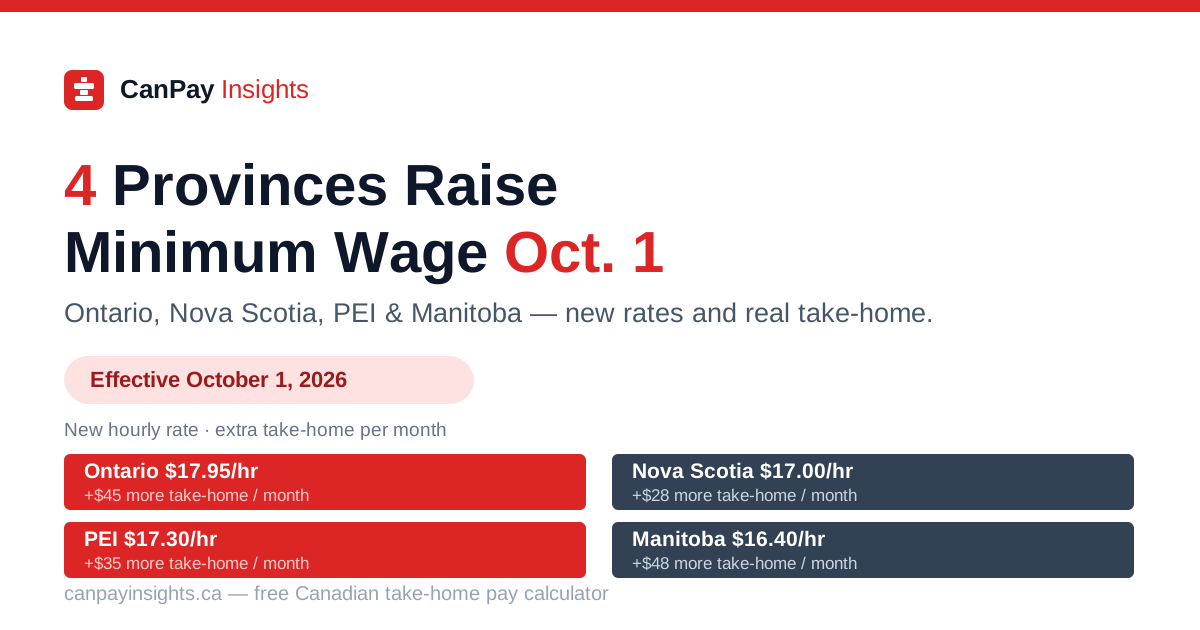
On October 1, 2026, five provinces raise their general minimum wage: Ontario from $17.60 to $17.95, Saskatchewan from $15.35 to $15.70, Nova Scotia from $16.75 to $17.00, Prince Edward Island from $17.00 to $17.30, and Manitoba from $16.00 to $16.40. Running the new rates through the CanPay Insights tax engine, a full-time (2,080 hours/year) minimum wage worker gains about $501 more take-home pay a year in Ontario, $508 in Saskatchewan, $339 in Nova Scotia, $417 in PEI, and $578 in Manitoba, after federal tax, provincial tax, CPP, and EI.
Five provinces, one date: October 1, 2026
Minimum wage rarely moves on a single national date, but this fall five provinces line up: Ontario, Saskatchewan, Nova Scotia, Prince Edward Island, and Manitoba all raise their general minimum wage on October 1, 2026. Each increase comes from a provincial indexing formula, not a one-off announcement, so the raises are modest — but they still change what full-time workers take home.
We ran the new rates through the CanPay Insights tax engine (2026 federal and provincial brackets, CPP/CPP2, and EI) to see exactly how much of each raise survives payroll deductions.
What's changing
| Province | Old rate | New rate (Oct 1) | Increase | Reason |
|---|---|---|---|---|
| Ontario | $17.60 | $17.95 | +$0.35 | CPI (1.9%), per the Employment Standards Act |
| Manitoba | $16.00 | $16.40 | +$0.40 | 2025 inflation rate, rounded to nearest 5¢ |
| Saskatchewan | $15.35 | $15.70 | +$0.35 | Annual indexation formula |
| Prince Edward Island | $17.00 | $17.30 | +$0.30 | CPI + 1% formula |
| Nova Scotia | $16.75 | $17.00 | +$0.25 | CPI + 1% formula (second increase of 2026) |
Manitoba's increase is the largest in cents (40); Ontario's affects the most workers — the province says more than 700,000 workers will see a bigger paycheque. Nova Scotia's move is its second of 2026: the province already raised its minimum wage from $16.50 to $16.75 on April 1.
What it's actually worth after tax
Full-time hours (40/week, 2,080/year), 2026 federal and provincial tax rates, basic personal amounts only:
| Province | New gross (full-time) | New take-home / year | New take-home / month | Extra vs. today | Extra / month |
|---|---|---|---|---|---|
| Manitoba | $34,112 | $28,082 | $2,340 | +$578/yr | +$48 |
| Saskatchewan | $32,656 | $27,597 | $2,300 | +$508/yr | +$42 |
| Ontario | $37,336 | $30,911 | $2,576 | +$501/yr | +$42 |
| Prince Edward Island | $35,984 | $29,470 | $2,456 | +$417/yr | +$35 |
| Nova Scotia | $35,360 | $28,706 | $2,392 | +$339/yr | +$28 |
Extra take-home = new annual take-home minus current annual take-home for the same worker in the same province, after federal tax, provincial tax, CPP/CPP2, and EI.
Why the gain is smaller than the raise looks
A 35-cent Ontario raise sounds like $728 more a year (35¢ × 2,080 hours) — but only about $501 of that survives payroll deductions, because the extra income is taxed and subject to CPP and EI exactly like the rest of the paycheque. Manitoba keeps the largest share of its raise (about 69.5 cents of every extra dollar, with Ontario close behind at about 69 cents); Nova Scotia keeps the smallest share (about 65 cents), since it already has the highest deduction rate on minimum-wage income in the country.
How these rates compare nationally
Even after October 1, Ontario's $17.95 and PEI's $17.30 remain below British Columbia ($18.25), Yukon ($18.51) and Nunavut ($20.17, the highest in the country since September 1). Manitoba's $16.40 and Nova Scotia's $17.00 stay in the middle of the pack, and Saskatchewan's $15.70 remains among the lowest. None of the other eight provinces and territories change their minimum wage on October 1 — for the full current picture across all 13 jurisdictions, see our minimum wage take-home pay study.
See your own numbers
These figures assume a single worker with no other income or credits. To check your own paycheque under the new rate, use the free take-home pay calculator, or go straight to your province: Ontario paycheck calculator, the Ontario take-home pay guide, the Manitoba take-home pay guide, the Nova Scotia take-home pay guide, or the PEI take-home pay guide.
Sources & disclaimer
Rate and effective-date figures are based on official government announcements: the Government of Ontario (Employment Standards Act minimum wage indexing, April 2026), the Government of Nova Scotia (news release, December 2025 and April 2026), the Government of Manitoba (news release, April 2026), the Government of Saskatchewan (minimum wage page: "Effective October 1, 2026, the minimum wage will be $15.70 per hour"), and Prince Edward Island's published minimum wage schedule, cross-checked against contemporaneous reporting. Take-home figures are calculated with the CanPay Insights tax engine using 2026 federal and provincial rates, full-time hours (2,080/year), a single worker, and basic personal amounts only — real paycheques vary with credits, benefits, and actual hours worked. This is general information, not tax advice.
Calculate Your Take-Home Pay
Enter your salary and province to see detailed tax breakdowns instantly.
Use Free CalculatorFrequently Asked Questions
Which provinces are raising minimum wage on October 1, 2026?⌄
What is Ontario’s new minimum wage?⌄
How much extra will a full-time minimum wage worker take home?⌄
Why is Nova Scotia raising its minimum wage twice in one year?⌄
What is the minimum wage in the rest of Canada after October 1, 2026?⌄
Does a higher minimum wage change CPP and EI deductions?⌄
Share this article
Help others learn about Canadian taxes
Disclaimer: This content is based on publicly available information and general tax knowledge for reference only. Individual tax situations may vary. Please consult a qualified tax professional or accountant for personalized advice.