Quick Answer
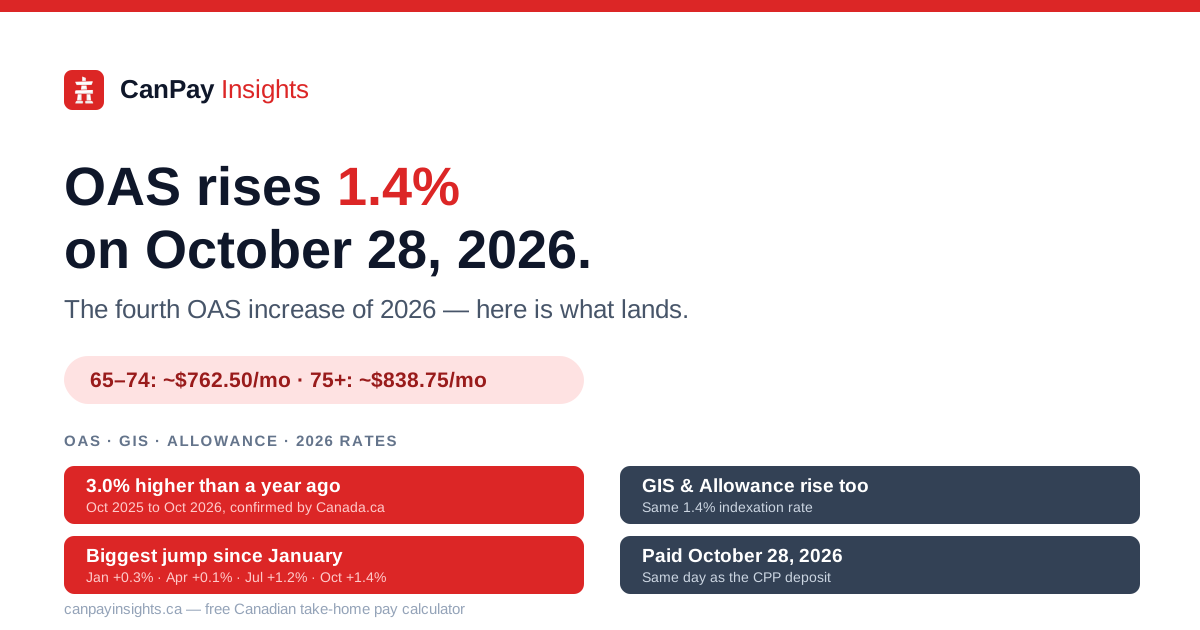
Old Age Security payments increase 1.4% for the October–December 2026 quarter, effective with the October 28, 2026 payment — the fourth OAS indexation of 2026, following a 1.2% rise in July, for a combined 3.0% increase over the past 12 months. Applying that confirmed rate to the confirmed July–September 2026 maximums works out to roughly $762.50 a month for ages 65–74 (up from $751.97) and $838.75 for ages 75-and-over (up from $827.17). The Guaranteed Income Supplement and the Allowance rise by the same 1.4%.
OAS goes up for the fourth time this year — and this is the biggest jump since January
Every quarter, Old Age Security is indexed to inflation, and Canada.ca has now confirmed the rate for October, November, and December 2026: 1.4%, arriving with the October 28, 2026 payment. It is the largest single quarterly increase since January, and it pushes the year-over-year climb to a confirmed 3.0% — the fourth OAS indexation of 2026 alone.
Key facts
- 1.4% increase, effective October 28, 2026 — Canada.ca's official OAS payment page confirms the rate for the October–December quarter.
- 3.0% over the past 12 months — from October 2025 to October 2026, per the same source.
- The biggest quarterly bump of 2026 so far: January added 0.3%, April added just 0.1%, July added 1.2%, and October adds 1.4%.
- GIS and the Allowance rise by the same 1.4% — they are indexed to the same CPI measure as the OAS pension.
What the October payment actually adds
Service Canada had not yet published the rounded October–December dollar figures on its quarterly rate card as of this writing — only the 1.4% rate itself is confirmed. Applying that confirmed rate to the confirmed July–September 2026 maximums gives a close estimate of what lands on October 28:
| Benefit | Jul–Sep 2026 (confirmed) | Oct–Dec 2026 (at +1.4%) | Monthly increase |
|---|---|---|---|
| OAS pension, ages 65–74 | $751.97 | ~$762.50 | +$10.53 |
| OAS pension, ages 75+ | $827.17 | ~$838.75 | +$11.58 |
| GIS, single senior, no other income | $1,123.17 | ~$1,138.89 | +$15.72 |
| GIS, with spouse receiving full OAS | $676.09 | ~$685.55 | +$9.46 |
| Allowance, ages 60–64 | $1,428.06 | ~$1,448.05 | +$19.99 |
| Allowance for the Survivor | $1,702.34 | ~$1,726.17 | +$23.83 |
Oct–Dec figures are CanPay Insights' own calculation: the confirmed 1.4% indexation rate applied to the confirmed July–September 2026 maximums. Service Canada rounds its own published figures to the cent on the official quarterly rate card, which was not yet posted at the time of writing — treat these as a close estimate, not the final deposit amount.
A year of small increases adding up
Unlike CPP, which is adjusted once a year every January, OAS is reviewed four times a year against the Consumer Price Index, so it tracks inflation quarter by quarter instead of waiting twelve months:
- January 2026: +0.3% (2.0% year-over-year)
- April 2026: +0.1% (2.1% year-over-year)
- July 2026: +1.2% (2.3% year-over-year)
- October 2026: +1.4% (3.0% year-over-year)
No quarter has ever reduced the payment. The Old Age Security Act guarantees benefits never fall even if the CPI drops — in a deflationary quarter, OAS simply holds at the prior amount instead of decreasing.
Does this affect your paycheque?
OAS is not payroll income and does not touch anyone's employer deductions — it lands as its own deposit. But a lot of recipients are still working, part-time, consulting, or seasonal, and both incomes land on the same tax return. OAS is taxable and reported on a T4A(OAS) slip alongside any T4 from a job. If you are weighing how a part-time paycheque adds up next to your pension, the free CanPay Insights salary calculator and CPP/EI calculator use the same 2026 rates behind every number on this page to show what actually lands, after tax, CPP, and EI.
When it arrives
October 28, 2026 is the tenth of twelve scheduled 2026 payment dates for both CPP and OAS — they are deposited the same day. Direct deposit typically lands that day; mailed cheques can take 5 to 10 business days longer, per Service Canada.
Sources & disclaimer
OAS, GIS, and Allowance payment amounts and the confirmed October–December 2026 indexation rate are from the Government of Canada's Old Age Security payment amounts page. The 2026 CPP/OAS payment calendar, including the October 28, 2026 date, is from the Government of Canada benefits payment calendar. Historical January and April 2026 quarterly rates are corroborated by independent Canadian pension-news outlets. October–December dollar figures in the table above are CanPay Insights' own calculation (confirmed rate × confirmed prior amount) pending Service Canada's official published rate card, and may differ by a cent or two from the final rounded figures. This is general information, not financial or tax advice.
Calculate Your Take-Home Pay
Enter your salary and province to see detailed tax breakdowns instantly.
Use Free CalculatorFrequently Asked Questions
How much is the OAS increase for October 2026?⌄
When does the new OAS amount arrive?⌄
What is the new maximum OAS payment?⌄
Does the Guaranteed Income Supplement (GIS) go up too?⌄
Why does OAS go up every quarter instead of once a year?⌄
Is OAS taxable, and does it affect my paycheque?⌄
Share this article
Help others learn about Canadian taxes
Disclaimer: This content is based on publicly available information and general tax knowledge for reference only. Individual tax situations may vary. Please consult a qualified tax professional or accountant for personalized advice.