Research note · figures as of September 18, 2026
What people do with a pay number
CanPay Insights is a free Canadian take-home pay calculator. Between August 7, 2026 and September 18, 2026 it recorded 4,317 anonymous calculations across 1,218 visits. It never learns what anyone earns — income is kept only as one of seven ranges — but it does see something no wage survey records: how people use a pay figure once they have one.
1 · Pricing the raise
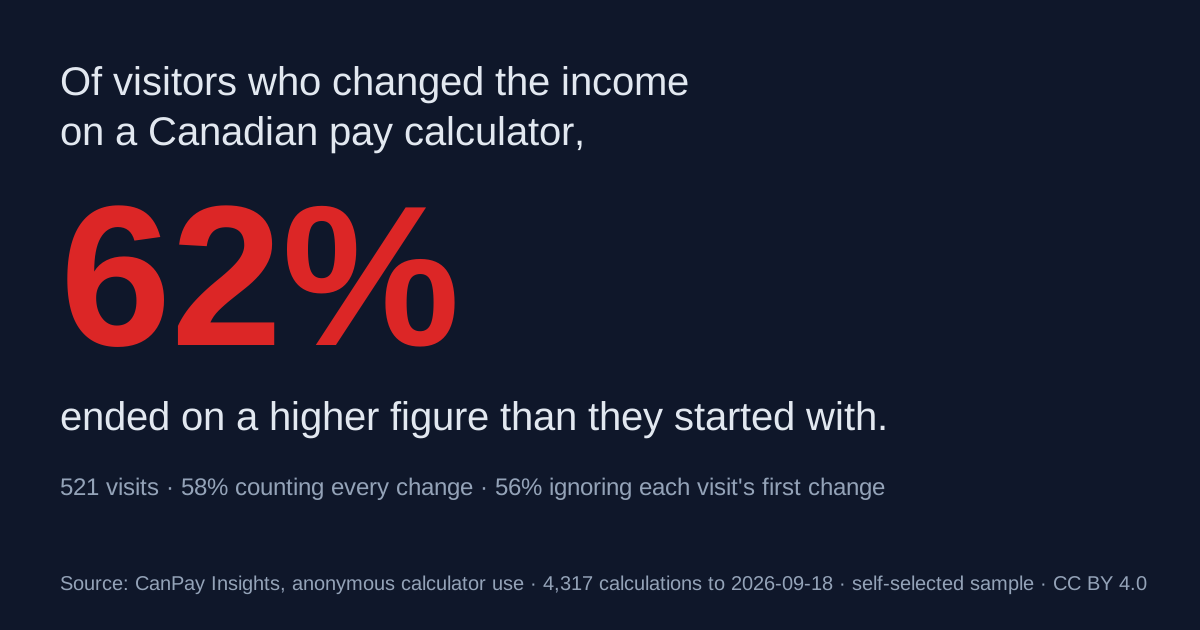
62%
of visitors who changed the income ended on a higher figure than they started with.
76% of visits run more than one calculation, and 71% of those change the income between runs. Among the 521 visits that ended in a different income range from the one they began in, 323 ended higher and 198 ended lower. People are mostly not modelling a pay cut. They are pricing the raise, the offer or the extra hours in front of them.
How this was tested. One visitor trying twenty figures should not count twenty times, so the headline gives each visit a single vote: where it ended against where it began. Counting every individual change instead gives 58% (837 up, 596 down). The form opens on a $20 hourly wage, so a visitor who picks a province before typing their own wage records that default first; ignoring each visit’s first change gives 56% (532 up, 417 down). The direction holds under all three counts. Income is stored in seven ranges, so a change that stays inside one range is invisible here.
2 · When shifts start
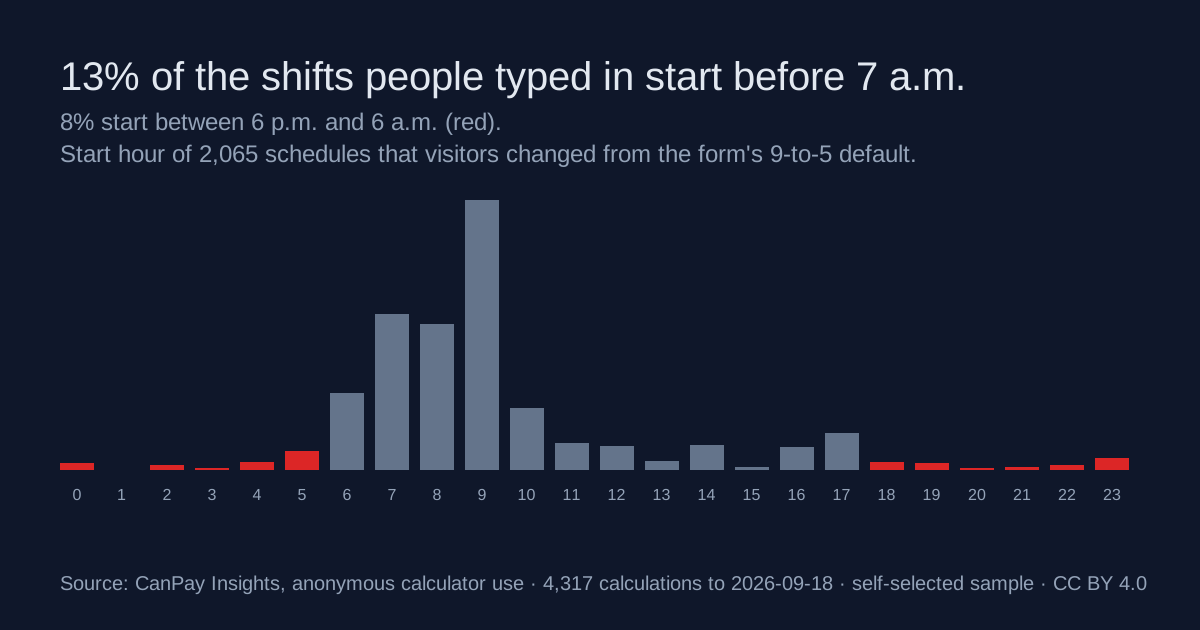
13%
of the shifts people typed in start before 7 a.m.
Hourly workers enter the shift they actually work. Of 2,065 schedules that visitors changed from the form’s default, 13% start before 7 a.m. and 8% start between 6 p.m. and 6 a.m. Statistics Canada reports how many hours people work; we know of no public Canadian dataset of the hour a shift begins.
How this was tested. The form opens on a 9-to-5 with a 30-minute break. 1,098 of the 3,163 shift calculations carry exactly that schedule, and a real nine-to-five cannot be told apart from a schedule nobody touched. Those rows are therefore left out above, which removes genuine nine-to-fives too — so read the figures as the spread of start times among people who adjusted their schedule. Keeping every row instead gives a floor: at least 46% of all shift calculations do not start at 9 a.m., and at least 5% start between 6 p.m. and 6 a.m.
3 · Weighing a move
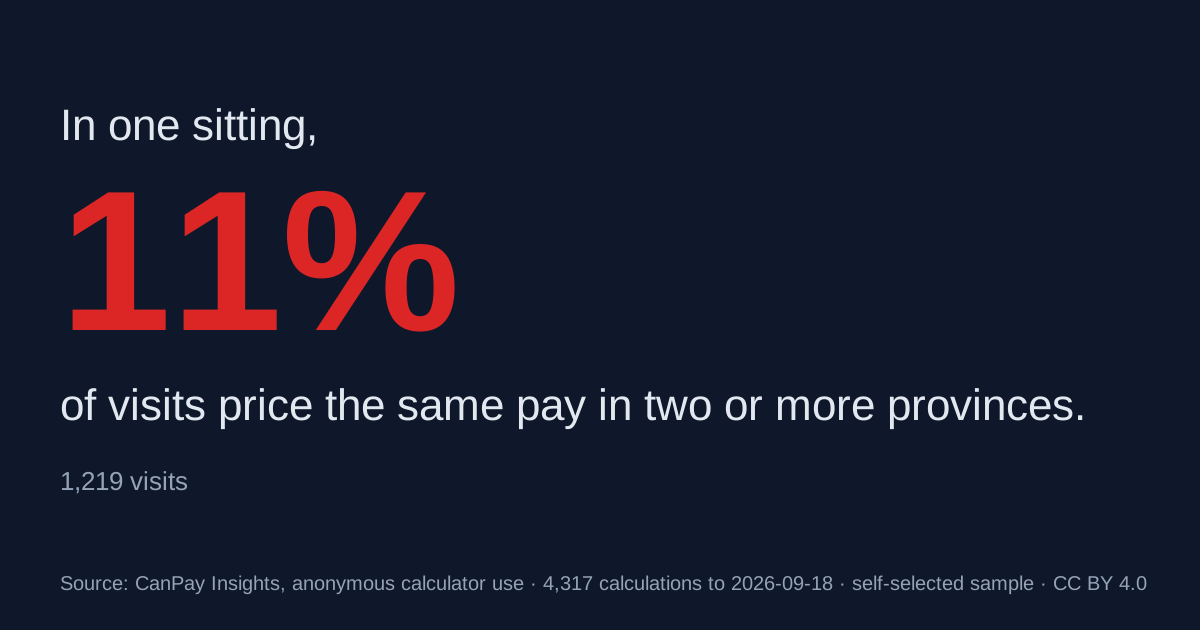
11%
of visits price the same pay in two or more provinces in one sitting.
132 of 1,219 visits calculated take-home pay for more than one province. Interprovincial migration appears in official statistics after the move has happened. This is what it looks like while someone is still deciding.
How this was tested. A visit counts when two or more different provinces appear in its calculations. Some of those visitors are curious rather than moving, and some are correcting a wrong first choice, so this is an upper reading of intent to relocate, not a count of movers.
Method
- Source. Calculations made on canpayinsights.ca and in the CanPay Insights iPhone app, August 7, 2026 to September 18, 2026. 19 calculations made by the site’s owner or in testing are excluded.
- What is recorded. The province, one of seven income ranges, the kind of calculation and, for hourly workers, the shift. No name, account, exact income, IP address or device fingerprint. A “visit” is a random identifier held in the page’s memory and gone when the page is closed or reloaded; it cannot link one day to the next, or one device to another. Details are in the privacy policy.
- What is not recorded. A calculator opened and left on its default values sends nothing, so the defaults do not count as calculations.
- This page is a snapshot. The figures are fixed as of September 18, 2026 and do not change until the page is reissued with a new date, so a citation stays checkable.
- The tax engine behind the calculator is compared with the CRA’s payroll deduction tables before every release. That concerns the pay figures visitors see, not the usage figures on this page.
Citing and reusing
The text, figures and charts on this page are free to quote and republish with credit (CC BY 4.0). Please describe the source as “people who used the CanPay Insights pay calculator”.
CanPay Insights, What people do with a pay number, 4,317 anonymous calculations, figures as of September 18, 2026. https://canpayinsights.ca/research/pay-calculator-behaviour
Journalists and researchers: if a cut by province or income range would help, write to info@canpayinsights.ca. Any figure we send has at least twenty visits behind it. The coarse open files are on the data page.